Guide No. 2 · The Stately Homes
Who Was Capability Brown?
Stand outside almost any great English house and look at the view: a lake in the middle distance, clumps of trees, grass running right up to the walls. It looks like countryside that happened to be there. Most of the time it was designed, dug and planted on purpose - and very often by the same man.
Lancelot Brown, baptised in Kirkharle in Northumberland on 30 August 1716 and dead in London on 6 February 1783, was the most in-demand landscape gardener England has produced. More than 170 parks are documented as his work. He got the nickname "Capability" from his sales pitch: shown round a client's grounds, he would say the place had great capabilities for improvement.
What he then did to it was consistent enough to be recognisable at a glance - a serpentine lake, clumps of trees, a belt of woodland round the edge, and lawn running uninterrupted to the front door - and it was copied so widely that it is now mistaken for the natural look of the English countryside.
From a Northumberland village to the best garden in England
Brown was not born into the world he ended up redesigning. He was the son of a land agent and a chambermaid, went to the village school at Cambo, and started work at 16 in the kitchen garden of a local estate. What changed everything was Stowe. He arrived in Buckinghamshire in 1741 to work for Lord Cobham, was made head gardener the following year at the age of 26 on a salary of £25, and stayed for a decade.
Stowe at that point was the most argued-about garden in the country, a vast landscape of temples and monuments that the designer William Kent was still working on. Brown spent his twenties inside the leading experiment of the age, and he was allowed to take private commissions from Cobham's friends while he was there. By the time he left in 1751 to set up on his own, he had a decade of practice and a client list drawn from the people who owned most of England.
What the revolution actually was
The style Brown became famous for is best understood by what it removed. The formal garden of the previous century put geometry between the house and the countryside: clipped parterres, straight avenues, canals, terraces, statues, walls. Brown took all of it out. In its place he put grass, water and trees, arranged to look accidental.
The individual moves are simple. A stream is dammed to make a broad, curving lake that reads as a river you cannot see the end of. Trees go in as scattered clumps rather than lines, positioned to frame some views and hide others. A belt of woodland runs round the perimeter so the visitor never sees where the property stops. And the ha-ha - a fence sunk into a ditch, invisible until you are almost on top of it - lets sheep and deer graze right up to the lawn without a hedge or railing interrupting the view from the windows. At Charlecote Park, Brown's 1760 contract with George Lucy spelled the job out in exactly these terms: widen the River Avon, smooth its banks, and build a brick ha-ha round the meadow to make a sufficient fence against the deer.
Blenheim, and the trick with the bridge
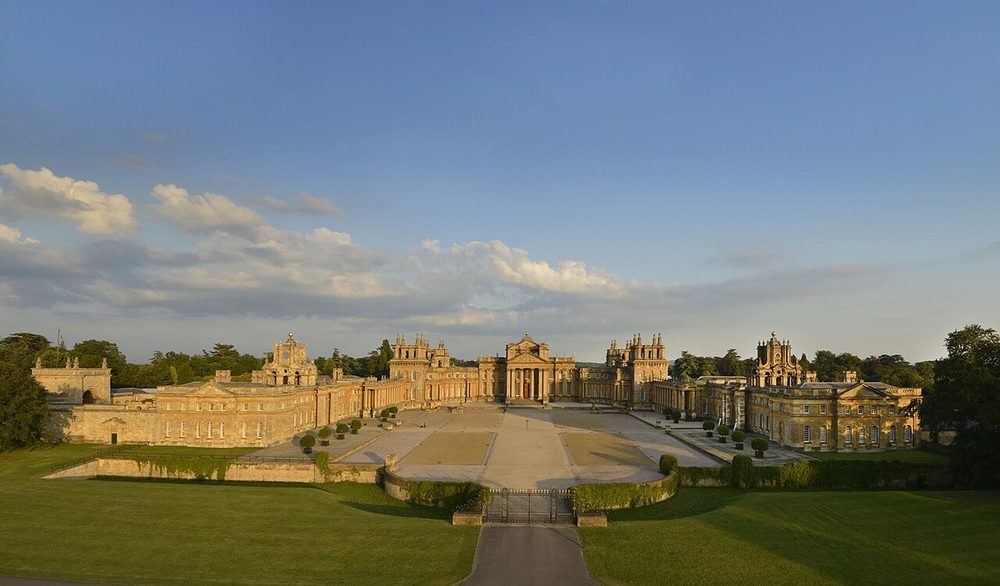
Blenheim Palace is the clearest demonstration of what Brown could do, partly because he inherited a problem. John Vanbrugh had built a Grand Bridge there on a scale that made no sense: an enormous structure, said to contain some thirty rooms, striding across what was then a modest stream. It looked ridiculous, and everyone knew it.
The 4th Duke of Marlborough brought Brown in around 1764. Over the following decade Brown built two dams on the River Glyme and created a lake of roughly 40 acres, in the process flooding the bridge's lower storeys. Vanbrugh's bridge stopped looking absurd and started looking inevitable, because the water had finally risen to meet it. It is the single best illustration of Brown's method: not decoration added to a landscape, but earth-moving on a scale that changed what the landscape was.
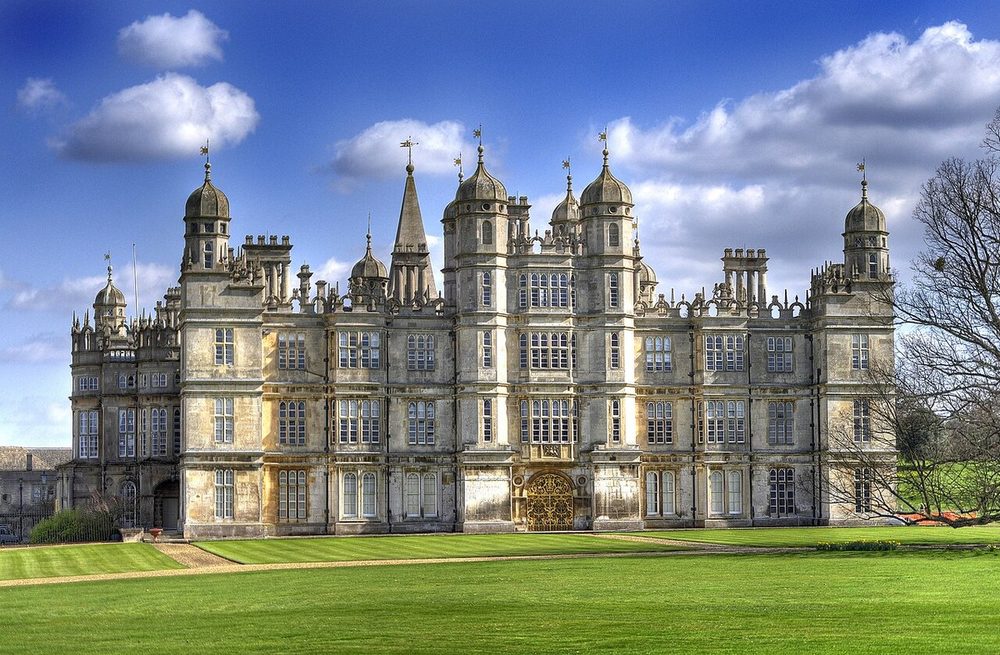
He worked at that scale repeatedly. At Chillington Hall in Staffordshire he dammed a stream in the 1760s to make The Pool, at around 70 acres the largest lake he ever built from scratch. At Burghley House he stayed roughly 25 years from the mid-1750s, his longest single commission, found a seam of waterproof clay on the estate, enlarged a nine-acre pond into a lake of about 26 acres, and designed the Lion Bridge in 1778.
A business as much as an art
Part of why Brown got through so much work is that he ran a proper firm. Rather than handing over a drawing and leaving, he offered what would now be called a turnkey service: survey the ground, design the park, then manage the digging, damming and planting through his own foremen. A commission typically cost around £500, and by the 1760s he was reportedly taking in something like £6,000 a year - an enormous income for a gardener's son. In 1764 he was appointed Master Gardener at Hampton Court, which put a royal seal on a career built entirely on private clients.
He was not only a landscape man either. At Corsham Court in Wiltshire, where he worked for twenty years from 1760, he acted as architect as well: the Picture Gallery and a Palladian front are both his, designed so that the best view of the park was the one you got from inside the gallery. That double role ran in the family. When Berrington Hall in Herefordshire was built for Thomas Harley in the late 1770s, the architect was Henry Holland, who by then was Brown's son-in-law. The National Trust describes Berrington's grounds as the last landscape Brown completed; he died in 1783, before the house was finished.
What was lost, and who objected
The uncomfortable half of the story is that Brown's fashion was close to total, and it was destructive. The formal gardens it replaced were not neglected relics - many were mature, expensive and admired - and they were dug out anyway because the taste of the moment demanded it. Very few survived. Bramham Park in Yorkshire is one of the exceptions: an early 18th-century formal landscape of avenues and water that was never swept away, and is now rare precisely because so many others were.
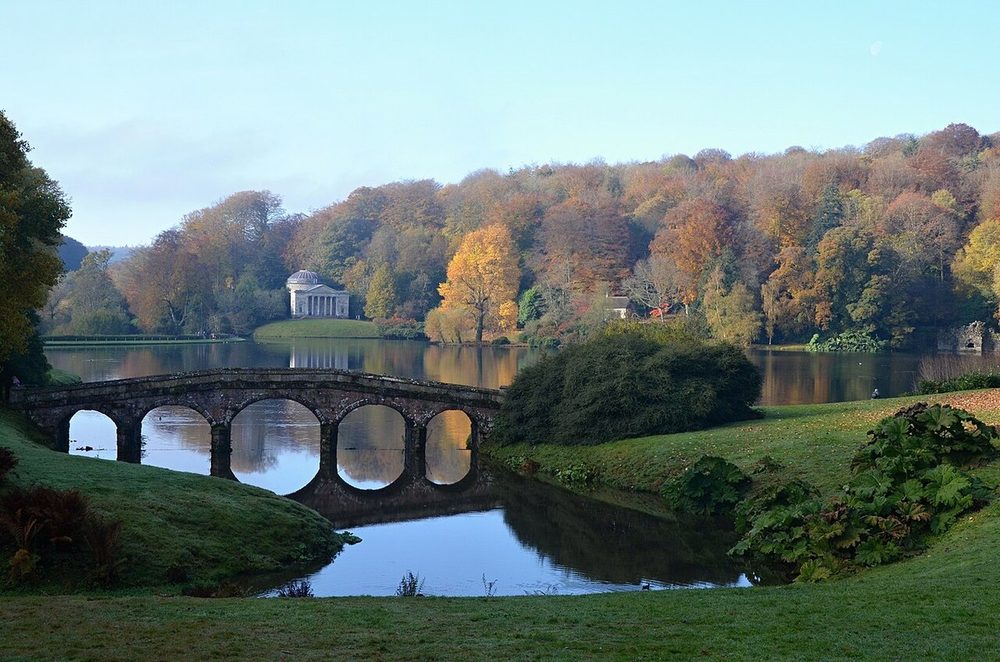
Nor was the criticism purely retrospective. Uvedale Price dismissed Brown's tree clumps as "so many puddings turned out of one common mould". The architect William Chambers complained that the gardens produced this way differed very little from common fields. The charge was sameness: that a method repeatable across 170 estates had to be, by definition, a formula. There were other 18th-century answers going at the same time - Stourhead in Wiltshire, laid out from the 1740s by its owner Henry Hoare as a circuit of lake and classical temples, is a picturesque garden built to be walked through as a sequence of pictures, which is a different idea from a Brown park designed to be looked at from the house.
Both charges have some force, and both miss something. Brown's parks were planted for a landscape nobody alive would see finished: the trees he put in as saplings only came good two or three generations later. The parks now praised as the finest thing about a day out at Petworth House or Ugbrooke House are not quite what he handed over. They are his design plus 250 years, which is exactly the timescale he was working to.
Quick answers
Who was Capability Brown?
Lancelot Brown (baptised 30 August 1716 in Kirkharle, Northumberland; died 6 February 1783) was England's most sought-after landscape gardener, responsible for more than 170 documented parks. He earned his nickname by telling prospective clients that their grounds had great 'capabilities' for improvement, and he reshaped so much of the country that the rolling parkland now assumed to be the natural English countryside is very often his invention.
What did a Capability Brown landscape look like?
A serpentine lake made by damming a stream, grass running uninterrupted right up to the walls of the house, scattered clumps of trees framing carefully judged views, and a belt of woodland around the perimeter to screen the outside world. Fences were sunk into ditches - ha-has - so livestock and deer could be kept off the lawn without a visible barrier breaking the view.
Where did Capability Brown learn his trade?
He arrived at Stowe in Buckinghamshire in 1741 to work for Lord Cobham, was made head gardener the following year at 26, and stayed a decade. Stowe was then the most talked-about garden in England and William Kent was working there too, so Brown spent his twenties inside the leading experiment of the age before setting up on his own.
Why do people criticise Capability Brown?
Because his fashion was total, and what it replaced was destroyed. Formal gardens - parterres, avenues, canals, terraces - were dug up across the country to make way for his lawns. Even in his own century the critics were sharp: Uvedale Price compared Brown's tree clumps to 'so many puddings turned out of one common mould', and the architect William Chambers complained that the resulting gardens differed very little from common fields.
Which Capability Brown landscapes can you still visit?
Dozens are open to the public. Blenheim Palace, Petworth House, Burghley House, Charlecote Park, Audley End, Corsham Court, Chillington Hall, Ugbrooke House and Berrington Hall on this list are all documented Brown commissions, and Stowe - where he trained - is open too. His parks have had 250 years to mature, so most look better now than they did when he handed them over.
Where to stand in one
Ten houses on the list where Brown either trained or worked, from the garden that taught him to the last park he finished:
Stowe House
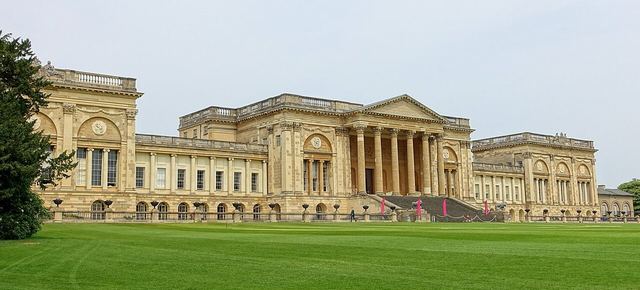
Where he learned it. Brown arrived in 1741 to work for Lord Cobham and was head gardener within a year, spending his twenties in what was then the most influential garden in England.
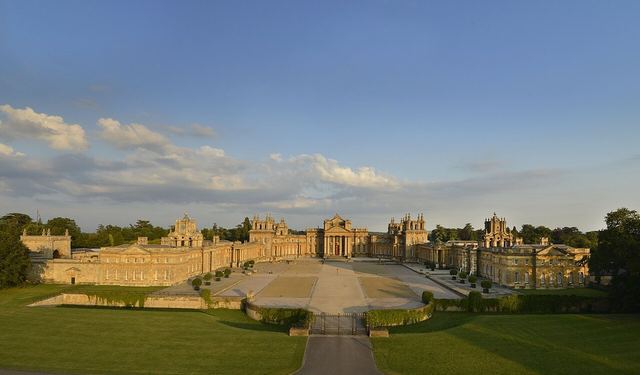
Blenheim Palace
His most famous piece of engineering: two dams built from 1765, a lake of roughly 40 acres, and Vanbrugh's over-scaled Grand Bridge finally brought into proportion by flooding its lower storeys.
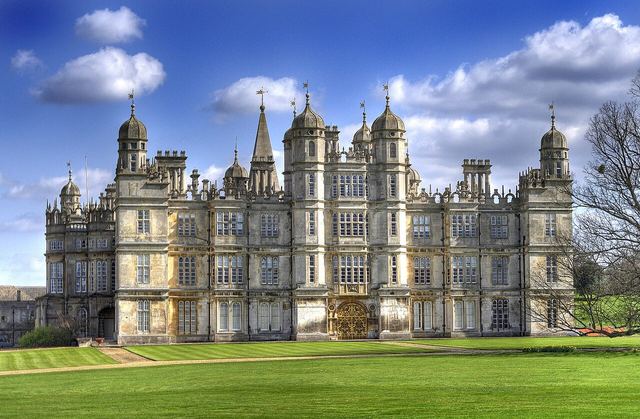
Burghley House
Roughly 25 years of work from the mid-1750s - Brown's longest commission. He found waterproof clay on the estate, turned a nine-acre pond into a lake of about 26 acres, and designed the Lion Bridge in 1778.
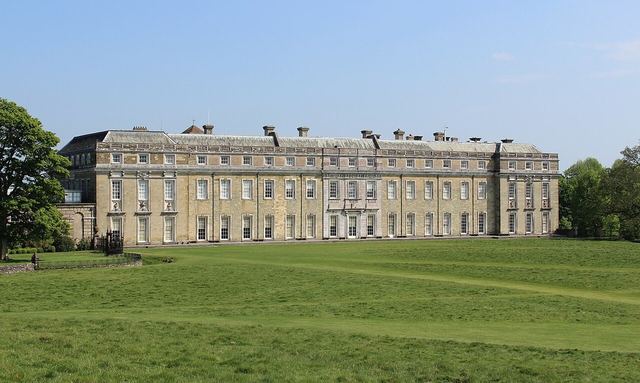
Petworth House
The deer park Brown reshaped in the 1750s and 60s, and the one most people have already seen without knowing it - Turner painted it repeatedly a generation later.
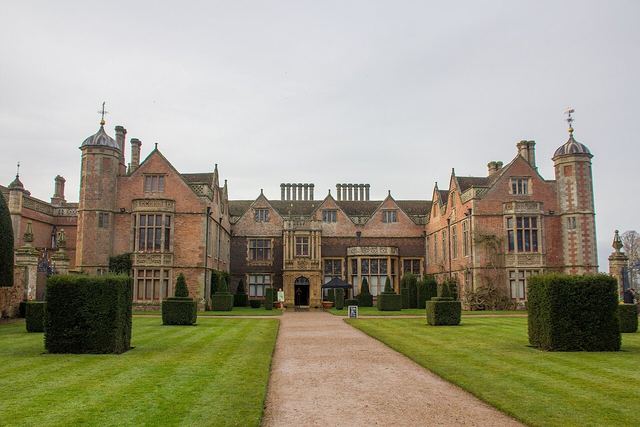
Charlecote Park
A contract signed with George Lucy in 1760 to widen the River Avon and smooth its banks, plus a brick ha-ha around the meadow to keep the deer off the lawn without a visible fence.
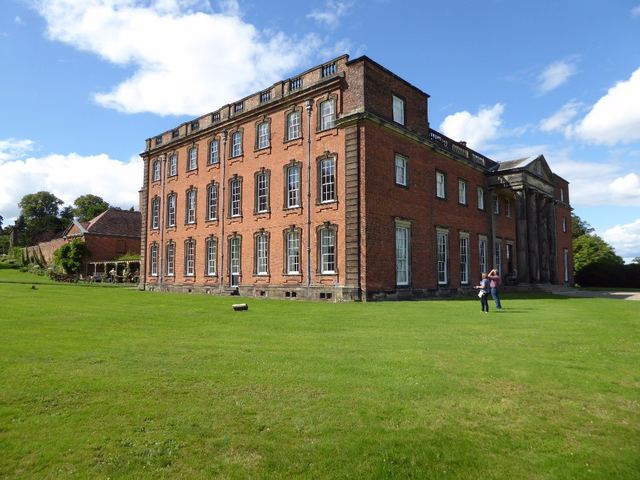
Chillington Hall
The Pool - at around 70 acres, the largest lake Brown ever built from scratch, made by damming a stream in the 1760s for Thomas Giffard. James Paine designed the bridge at its lower end.
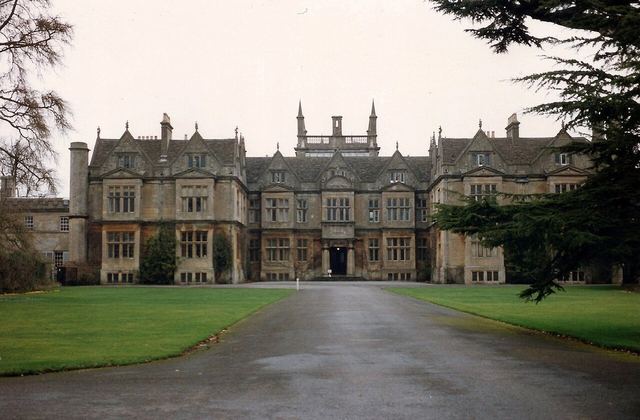
Corsham Court
Twenty years of work from 1760, and a reminder that Brown also practised as an architect: the Picture Gallery and a Palladian front are both his.
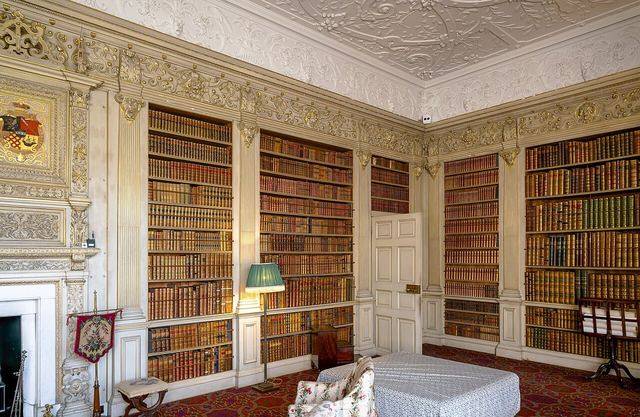
Audley End House and Gardens
A Jacobean mansion given an 18th-century park - one of the clearest places to see how completely a Brown landscape could be wrapped around a house built long before he was born.
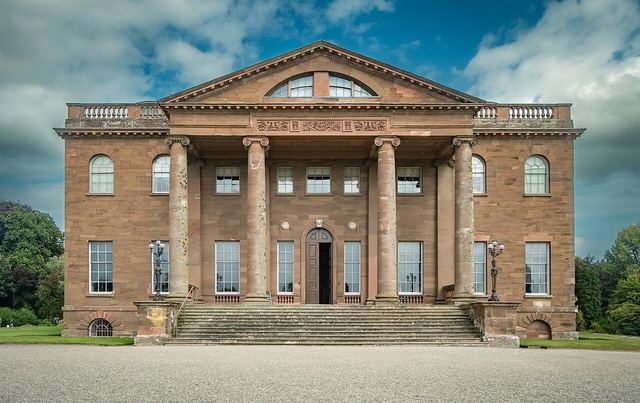
Berrington Hall
The National Trust calls this the last landscape Brown completed. The house was designed by Henry Holland, who was also Brown's son-in-law.
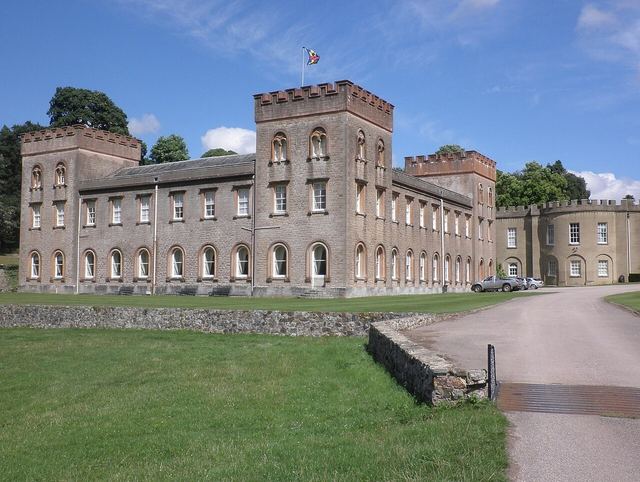
Ugbrooke House
The Clifford family's Devon park, laid out by Brown and still the main event for most visitors - reviewers spend their time walking the lake rather than the house.