Guide No. 20 · The Stately Homes
What Is a Ha-Ha?
Grass running from the front door to the horizon, with cattle grazing on it and nothing keeping them off the lawn. There is something keeping them off the lawn. You cannot see it from the house, which is the entire point.
A ha-ha is a sunken boundary. A ditch is dug along the edge of the garden, the inner face is built up as a vertical wall of stone or brick finishing flush with the turf, and the outer face is left as a gentle grass slope. Animals in the park can walk down the slope but cannot climb the wall, so the garden is fenced. Seen from the house, the ditch disappears and the lawn appears to continue without a break into the countryside beyond.
It is the reason the classic English park looks the way it does, and one of the few pieces of 18th-century garden engineering a visitor can walk up to and read straight off the ground.
A French ditch with an English reputation
The name is old and the joke behind it is older. The earliest printed account of the device appears in Antoine-Joseph Dezallier d'Argenville's La Theorie et la Pratique du Jardinage of 1709, which John James translated into English in 1712 as The Theory and Practice of Gardening. D'Argenville explained that the hidden opening surprises the eye on coming near it, and makes one cry "Ah! Ah!" - and the name stuck in both languages. French garden and military practice already had a word for the same thing: saut-de-loup, wolf jump, a sunken barrier an animal could not clear.
That military connection is not decorative. A dry ditch with a vertical revetment on one side is a fortification detail, and the earliest English versions were built as if by an engineer rather than a gardener. Horace Walpole, writing his history of modern gardening in the 1750s and 1760s, credited Charles Bridgeman with inventing the thing outright, which he had not - Walpole seems simply not to have known the French sources. Walpole also gave the name a second and more human origin story, describing ditches so astonishing to ordinary walkers that they were called ha-has for the surprise of meeting a sudden and unperceived check to their walk.
Stowe, and the ditch that changed the view
Stowe is where the ha-ha stopped being a curiosity. A first version was built round the Home Park in 1719, a turf wall set with projecting spikes. In the 1720s Charles Bridgeman and John Lee replaced it with something far more ambitious under the first Viscount Cobham: a long ha-ha with bastions and sharp angles running along the west and north sides of the gardens, later extended further. Landed visitors came, saw a garden with no visible boundary, and went home wanting one.
Once the fence could be hidden, the garden no longer had to stop at a line. William Kent took the point immediately, and Walpole's famous verdict on him, that he leaped the fence and saw that all nature was a garden, is in large part a verdict on the ha-ha. Capability Brown's generation then built entire careers on grass running uninterrupted from the windows to a distant clump of trees, and that only works if the livestock keeping the grass short are held back by something nobody can see. Our guides to Capability Brown and to Humphry Repton and the Red Books both describe landscapes that depend on this ditch and rarely mention it.
How one is actually built
The construction is simple enough that the skill is all in the setting out. A wide ditch is excavated along the intended boundary. On the garden side, a retaining wall of dry stone or brick is built up the face of the cut to finish exactly level with the lawn, so that a person walking towards it sees turf all the way to the edge and then a drop. On the park side, the ditch floor rises as a mown slope gentle enough for an animal to walk down without injury and useless for climbing out the other way. Drainage matters more than height: a ha-ha that ponds water undermines its own wall, so most are cut with a fall along their length.
The dimensions follow the animal. A ha-ha meant to hold sheep can be shallower than one meant to hold cattle, and a deer park boundary has to be deeper again. The wall is doing the work, so it is the wall that fails first, and a collapsed ha-ha usually shows itself as a soft bulge in a line of turf long before anyone finds brickwork.
The point was money as much as beauty
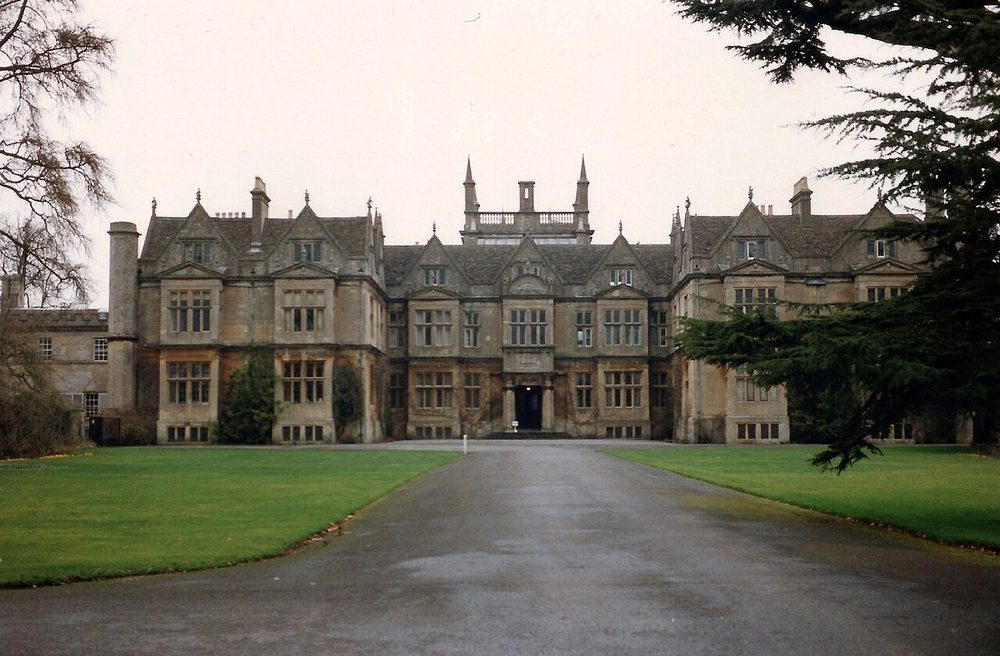
The effect was the selling point, but the economics underneath it were plainer. Grass has to be grazed or cut, and before the mower an estate's lawn was kept short by animals. A ha-ha let an owner run sheep, cattle or deer as close to the house as taste allowed, keep them out of the flower beds, and avoid building and maintaining miles of park wall. At Corsham Court, Brown's plan of 1761 put the ha-ha roughly 400 yards from the house, running in a straight line to the north front, dividing productive park from ornamental pleasure ground with one cut. Visitors today still walk out past it among the sheep and deer, which is more or less what it was designed to allow.
The same logic explains why ha-has turn up on working estates with no pretension to landscape fashion at all. Beningbrough Hall uses one to hold grazing stock off the gardens and away from the house. Parham House sits in a medieval deer park whose registered boundaries mix ha-has with iron fencing, the croquet lawn running out to meet one of them.
Now a listed structure in its own right
A device designed to be invisible has ended up formally protected. At Wrest Park in Bedfordshire, two ha-has are separately listed at Grade II; the one crossing the Old Park was designated in 2012 for the care of its construction and its considerable length, and for what it contributes to a Grade I registered landscape. Ha-has are recorded as a monument type in their own right on the National Heritage List for England, which means a repair to one can require listed building consent rather than a bag of mortar and a free Saturday.
Plenty have not survived that well. The curators at Sewerby Hall in East Yorkshire describe their surviving stretch as the last significant section of what was once a complex of ha-has around the estate, most of it now lost under scrub or backfilled. That is the usual fate. A ha-ha only reads as a designed feature while it is maintained; left alone for fifty years it silts up, the wall leans in, and it becomes what most people would call a ditch with some old bricks in it.

What to look for on a visit
Stand at the front of the house and look for the seam. If the lawn meets grazed parkland with no gate, no fence and no hedge, and the grass changes texture along a suspiciously straight line, the ha-ha is on that line. Walk to it and the ditch appears all at once, usually about waist to head deep. Then turn round and look back at the house, which is the view the ha-ha was never meant to spoil and the one most visitors forget to take.
Quick answers
What is a ha-ha?
A ha-ha is a sunken boundary: a ditch dug along the edge of a garden or lawn, with a vertical retaining wall built up the inner face to finish flush with the turf, and a gentle grass slope on the outer face. Livestock cannot climb the wall, so the garden is fenced. From the house, the ditch is invisible and the grass appears to run unbroken into the parkland beyond.
Why is it called a ha-ha?
From an exclamation of surprise. The earliest printed account, in Dezallier d'Argenville's La Theorie et la Pratique du Jardinage of 1709 and John James's English translation of 1712, says the hidden opening surprises the eye on coming near it and makes one cry 'Ah! Ah!'. Horace Walpole, writing decades later, gave a slightly different version: the ditches were named for the surprise of walkers who met a sudden and unperceived check to their walk.
Who invented the ha-ha?
The device has no single named inventor. It is documented in French garden and fortification practice before it reached England, where the equivalent term saut-de-loup, or wolf jump, describes the same sunken barrier. Charles Bridgeman is usually credited with making it a feature of English landscape design, at Stowe in the 1720s. Walpole credited Bridgeman with inventing it outright, apparently unaware of the earlier French sources.
What is a ha-ha for?
It keeps grazing animals out of the garden while keeping the boundary out of the view. Before wire fencing, the alternative was a wall or a paling fence, which would have cut the composition in two. A ha-ha let a landowner graze sheep, cattle or deer right up to the lawn edge and still look out from the house across what appeared to be one continuous sweep of grass.
Can you still see working ha-has at stately homes?
Yes. The National Trust names ha-has at Stowe, Berrington Hall, Kedleston Hall, Kingston Lacy and Petworth among its own properties, and there are many more on privately owned and English Heritage estates. Some are still doing their original job with livestock in the park; others survive only as a buried line of brickwork, and a few are separately listed structures in their own right.
Where to stand on the edge of one
Nine houses on the list with a documented ha-ha, from the one that started the fashion to two that are listed structures on their own account:
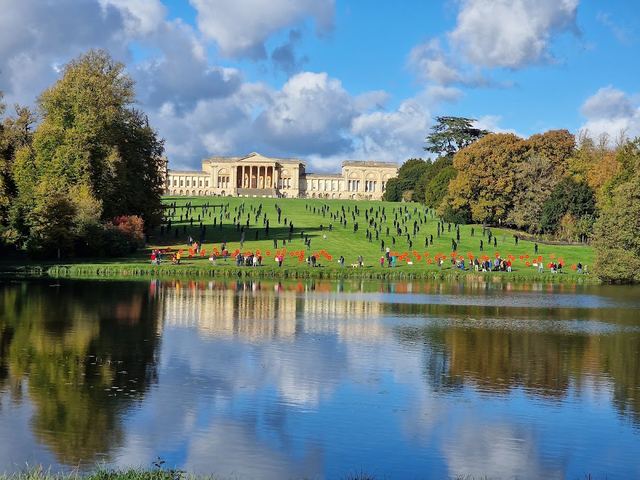
Stowe House
The ha-ha that made the device famous. A first version went round the Home Park in 1719; Charles Bridgeman and John Lee replaced it in the 1720s with a longer bastioned ditch along the west and north boundaries.
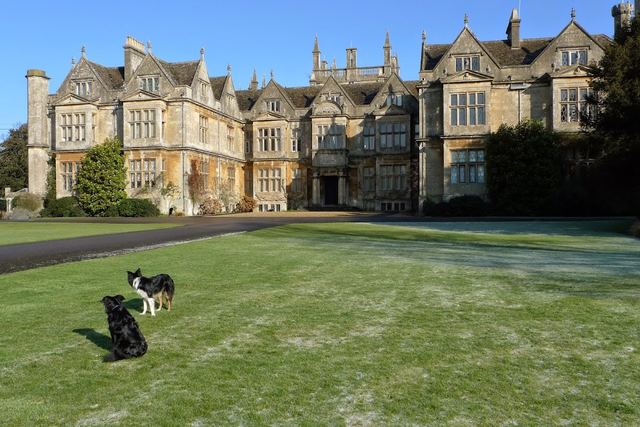
Corsham Court
Capability Brown's 1761 plan cut a ha-ha in a straight line to the north front, roughly 400 yards out, to divide park from pleasure ground without blocking the view. Reviewers still mention walking out past it among the sheep and deer.

Wrest Park
Two of the ha-has here are separately listed at Grade II. The one running across the Old Park was designated in 2012 for its careful construction and considerable length within a Grade I registered landscape.
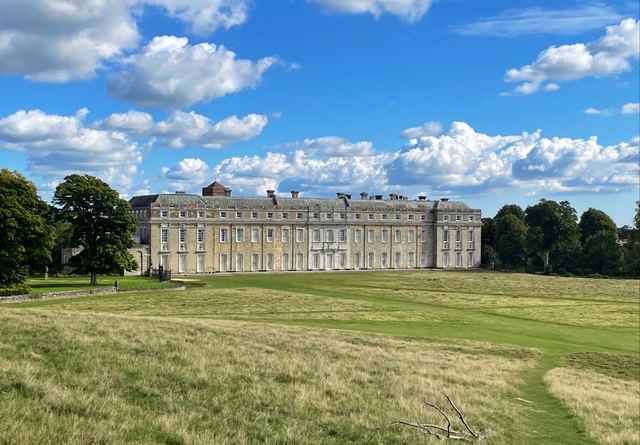
Petworth House
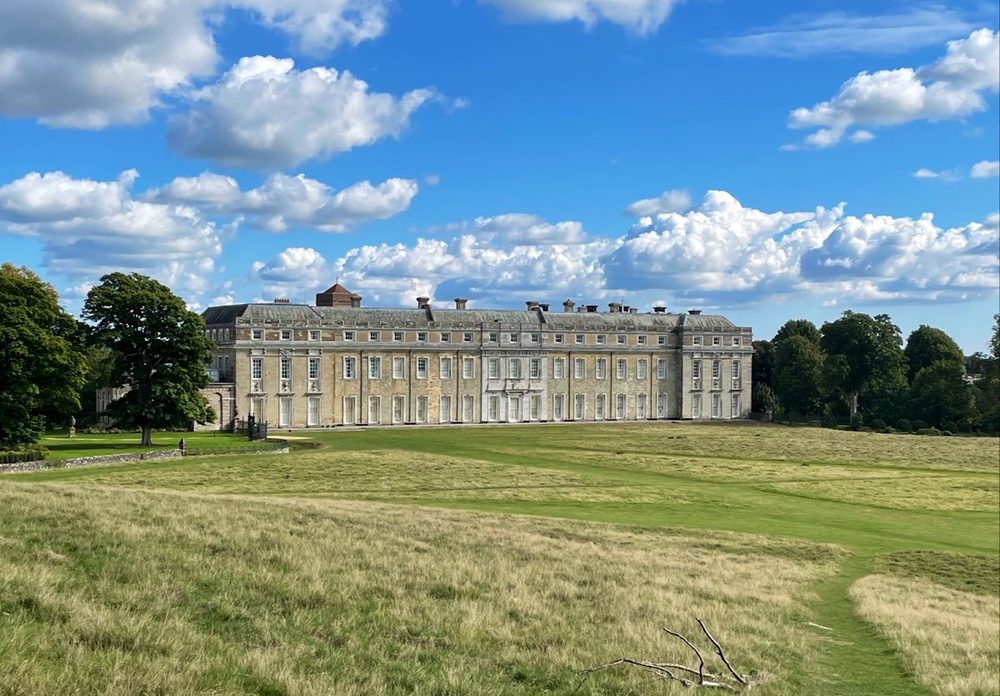
Named by the National Trust among its ha-ha properties, in a deer park landscaped by Capability Brown - the setting Turner painted repeatedly, with the herd grazing to the edge of the lawn.
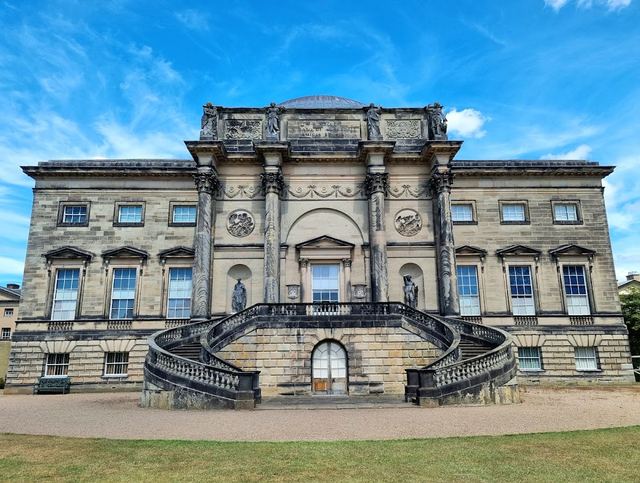
Kedleston Hall
Robert Adam's Neoclassical house for the Curzons, with a ha-ha listed by the National Trust among its own examples, holding the parkland grazing back from the pleasure ground.
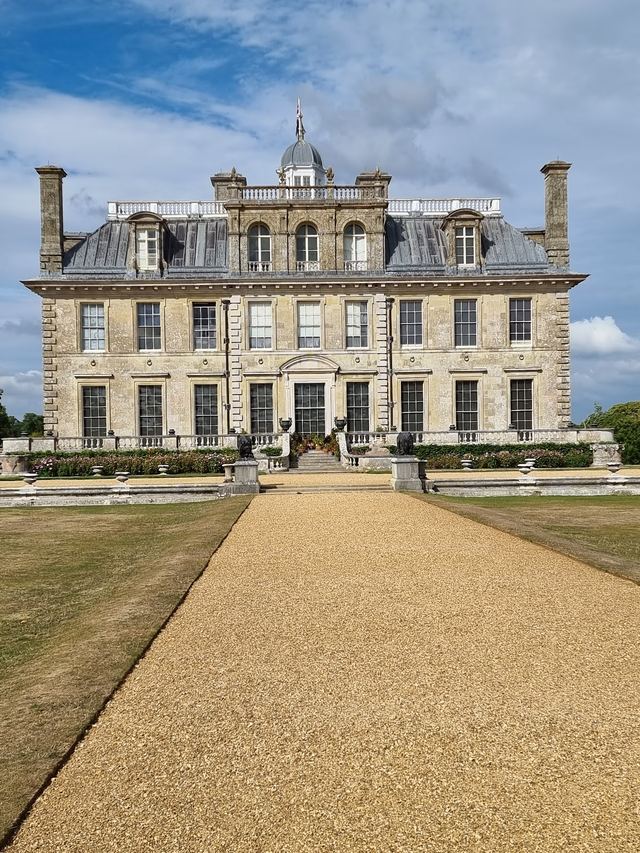
Kingston Lacy
Another of the Trust's named ha-has, on an estate whose parkland still carries grazing cattle and lambs right up towards the house.
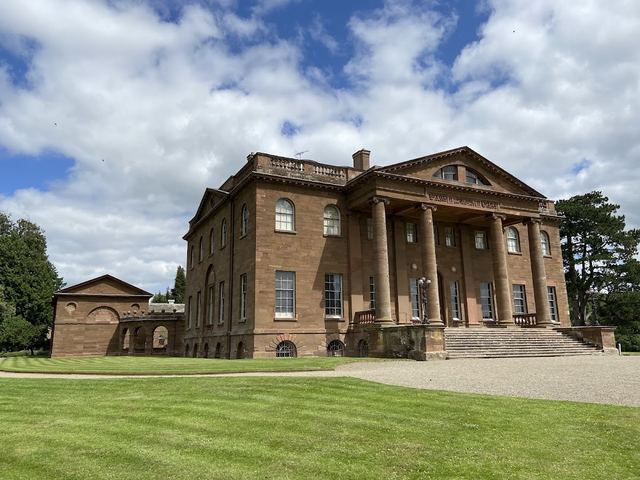
Berrington Hall
A Henry Holland house inside a Capability Brown landscape, and one of the ha-has the National Trust names - Brown's uninterrupted sweep of grass depends on it.
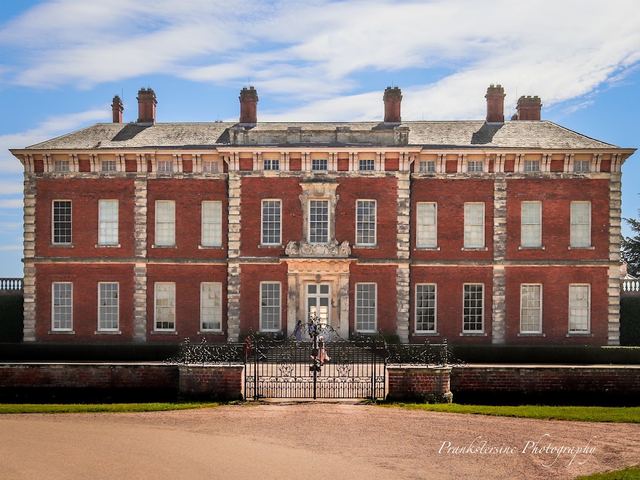
Beningbrough Hall
A ha-ha separates the Baroque house and its gardens from the grazed parkland, and the current garden redesign has put a ha-ha walk back into the visitor route.
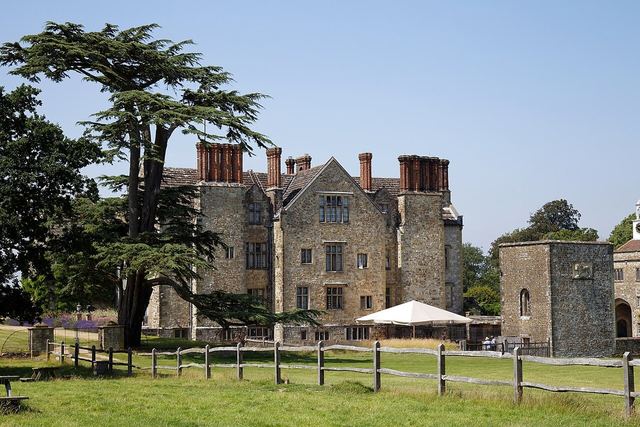
Parham House
An Elizabethan house in a medieval deer park whose registered landscape is bounded by ha-has as well as iron fencing, with the croquet lawn running out to one of them.