Guide No. 16 · The Stately Homes
Who Still Lives in Britain's Stately Homes?
Some of these houses are museums with a family name attached. Some are private homes that let the public in three afternoons a week. A surprising number are both at once, and the arrangement is not trivia: it decides when you can visit, how much of the building you get to see, and which membership card is any use at the gate.
Of the 286 houses on this list, 180 are run by a conservation charity: the National Trust, English Heritage, the National Trust for Scotland, Cadw or Historic Environment Scotland. Another 73 are run by a named family or a titled owner instead, and the remaining 33 sit with independent trusts, foundations and estate companies. What that split cannot tell you is who sleeps there, because the two groups overlap. A good number of National Trust houses were handed over on terms that let the family stay, and the family is still in them.
For a visitor the distinction is practical rather than sentimental. Occupation is what produces the three-days-a-week opening, the guided-tour-only rule, the corridor that stops at a rope, and the wing that never appears on the plan at all.
Three arrangements, not two
The obvious pair is a charity-run house at one end and a private family seat at the other. Most Trust properties belong squarely at the first end: Shugborough Estate and Killerton are presented as complete visits, opened on a full weekly timetable, with the charity setting the hours and the route.
At the other end sit the houses run by the family that owns them. Deene Park has been the Brudenells' since 1514, Hoghton Tower the de Hoghtons' since the 12th century, Levens Hall the Bagots'. These are businesses as well as homes, and the admission ticket is only part of the income: weddings, filming, events and holiday lets carry a good deal of the rest.
The third arrangement is the least visible and, for the largest houses, the most common. The family still owns the estate, but the house itself has been settled on a charitable trust the family set up. Chatsworth is the clearest case. In 1981 the Duke, his family and the family trustees granted a 99-year lease of the house, its essential contents, the garden and the park to the Chatsworth House Trust at a rent of a pound a year. Every penny of admission income goes to the charity, and the Duke and Duchess pay rent to live in the house their family has held since the 1550s. Burghley, Harewood and Hopetoun are all built on the same shape.
The 1937 deal that put families inside National Trust houses
The overlap is not an accident or a special favour. It was designed. Through the 1930s the National Trust set up what became known as the Country Houses Scheme, and the National Trust Acts of 1937 and 1939 made it work in law. An owner could transfer the house, and an endowment large enough to maintain it, to the Trust. Estate duty was avoided on both. The family and its heirs could go on living in the house. In exchange, the public got access.
Oxburgh Hall shows how close some of these houses came to disappearing first. In 1951 the estate was sold to an insurance company and broken into lots for auction. Sybil, Lady Bedingfeld bought back the hall and its gardens and gave them to the Trust the following year, on condition that the family retained the right to occupy part of the house in perpetuity. They hold the south-east corner still, having been at Oxburgh since the 1480s.
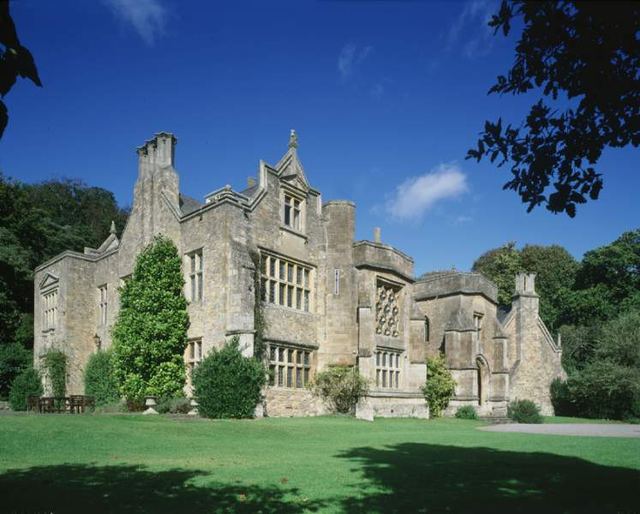
Antony in Cornwall went to the Trust in 1961, given by Sir John Carew Pole on the understanding that his family could stay. They are there now, and much of the collection on display is on loan from them rather than owned by the charity. Clevedon Court arrived by a bleaker route in 1960, surrendered in part payment of death duties to the Treasury, which passed it to the Trust. The Eltons had been there more than 250 years and are there yet.
What actually changes when you visit
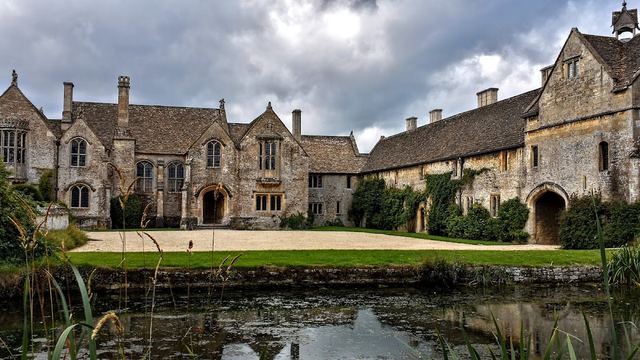
Start with the calendar, because occupation shows up there first. Great Chalfield Manor was given to the Trust during the Second World War on condition the donor's descendants could stay, and his grandson lives there now. The manor is shown by 45-minute guided tour only, on a short list of set times from Tuesday to Thursday and on Sunday afternoons, and it is shut on Mondays, Fridays and Saturdays. That is not a charity rationing staff. That is a family whose kitchen is on the other side of the door.
Then the floor plan. At Clevedon Court only a limited number of rooms are open, because the rest is somebody's flat, and entry is restricted to certain afternoons between spring and early autumn. A visitor expecting the full circuit of a big Trust house will find a shorter route and a lot of closed doors.
What you get back is harder to put on a leaflet. Reviewers of these houses keep reaching for the same word, lived-in: heirlooms still in use, family photographs on the tables, rooms rearranged recently rather than staged to a date. At Deene Park several visitors mention being greeted by members of the household during the tour, which is not an experience many museums can offer.
None of this splits cleanly along the ownership line, and it is worth not over-reading the badge. Plenty of family-run houses open generously through the season, and plenty of unoccupied charity houses run timed guided tours because the staircase is narrow. The reliable signal is the opening pattern, not the logo on the sign.
Two membership cards, two different sets of houses
This is where the distinction costs money. National Trust membership covers Trust properties, and that includes every house above where a family still lives in a wing: Oxburgh, Antony, Clevedon Court and Great Chalfield are all on the card. English Heritage membership is a separate card covering a separate portfolio.
Neither one opens a privately owned house. Those have their own body, Historic Houses, which represents independently owned historic houses across the UK and whose membership gives free entry to hundreds of member houses and gardens, at around £71 a year for one person at the time of writing. For anyone whose favourite places turn out to be the ones with somebody living upstairs, that is the card that matters, and it is worth checking against the two big charity schemes before renewing either: we have run the sums on National Trust membership and on English Heritage membership elsewhere on the site.
How to tell before you go
Three signals, all of them on a house's own page or its operator's site. Who is named as running it, a charity or a family. How many days a week it opens, and whether the season stops in September. And whether the house is entered freely or by timed guided tour only. A house open three afternoons a week from April to September, by 45-minute tour, showing eight rooms, is almost certainly a home that admits visitors rather than a museum that happens to have a family name over the door. Both are worth the trip. They just want booking differently.
Quick answers
Are any stately homes still lived in by the family who built them?
Yes, a substantial minority. Of the 286 houses on this list, 73 are run by a named family or titled owner rather than by a conservation charity, and a further group of National Trust properties are lived in by the family who gave them to the Trust. Continuous occupation by one family for four or five centuries is not unusual: Deene Park has been the Brudenells' since 1514, and Stonor Park has been in Stonor hands for more than 850 years.
Do families still live in National Trust houses?
Yes. Under the Trust's Country Houses Scheme, made workable by the National Trust Acts of 1937 and 1939, an owner could transfer a house and an endowment for its upkeep to the Trust, escape estate duty on both, and go on living there with their heirs, provided the public was given access. Oxburgh Hall, Antony, Clevedon Court and Great Chalfield Manor are all National Trust properties with the family still in residence.
What is the difference for a visitor between a family-run house and a trust-run one?
Mostly access. A house that is still somebody's home tends to open on fewer days, more often by guided tour only, with a private wing closed off and a shorter season. In return you usually get a building that reads as a home rather than a display: furniture in use, family photographs, and rooms that were rearranged last year rather than in 1908.
Does National Trust membership get me into privately owned stately homes?
No. National Trust membership covers National Trust properties, including the ones where a family still lives in part of the house. Independently owned houses have their own membership body, Historic Houses, whose card gives free entry to hundreds of member houses and gardens. English Heritage membership is a third card again.
Why do so many stately homes belong to charities at all?
Death duties, mainly. Estate duty rose steeply through the first half of the 20th century and a house with no separate endowment could not pay it. Handing the house and an endowment to the National Trust, or settling it on a charitable trust set up by the family, as the Devonshires did at Chatsworth in 1981, was the way to keep the building intact and the family inside it.
Where to see the difference
Nine houses across all three arrangements, from Trust properties with the donor family still in a wing to seats the same family has run for five centuries:
Great Chalfield Manor
National Trust, and still lived in by the family who restored it. The house is shown by 45-minute guided tour only, on a handful of days a week, which is the occupancy showing through the timetable.
Clevedon Court
Passed to the Trust in 1960 in part payment of death duties. The Elton family still occupy part of it, so a limited number of rooms are open and the afternoons are restricted.
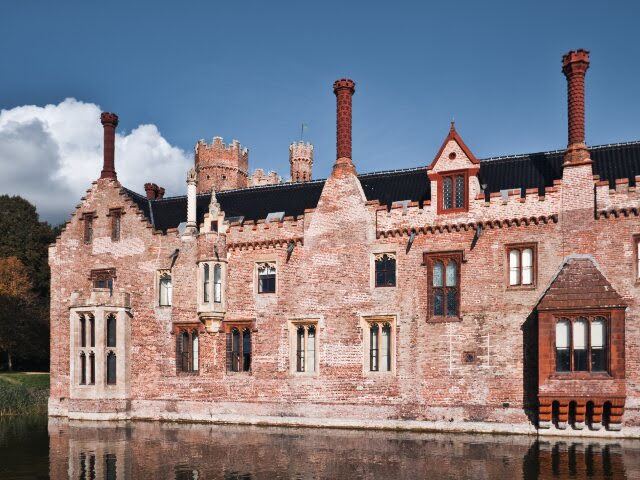
Oxburgh Hall
Given to the Trust in 1952 on condition that the Bedingfelds kept the right to occupy part of the house in perpetuity. They have been at Oxburgh since the 1480s.
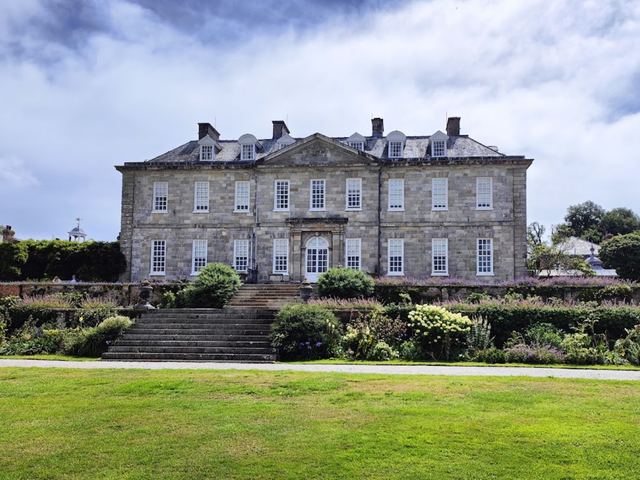
Antony
Given by Sir John Carew Pole in 1961 on the understanding that his family could stay. They did, and much of the collection on show is on loan from them.
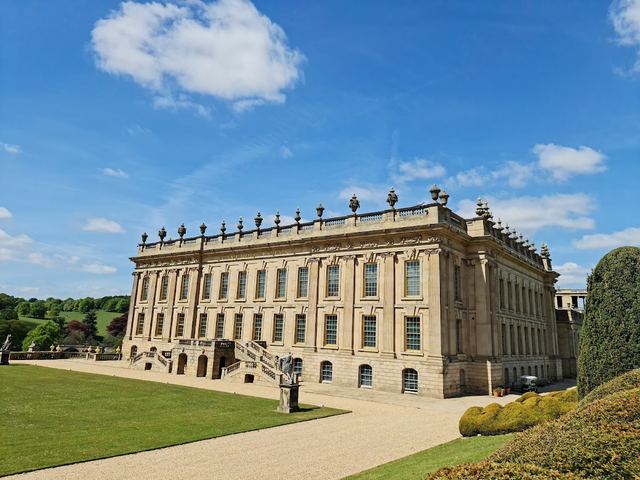
Chatsworth House
Family-owned but charitably held: in 1981 the Devonshires granted a 99-year lease of the house, garden and park to the Chatsworth House Trust for a pound a year. The Duke and Duchess pay rent to live there.
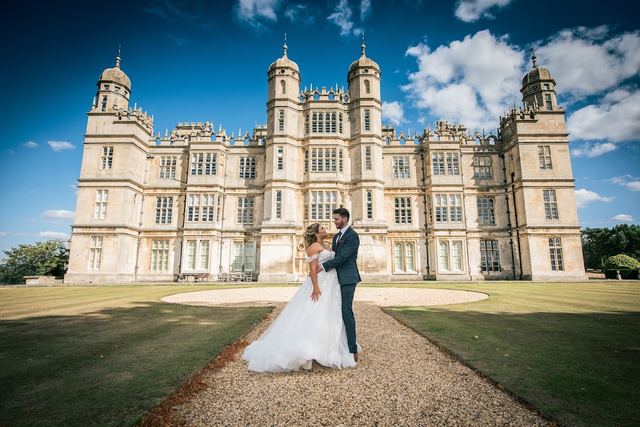
Burghley House
Held by the Burghley House Preservation Trust and still home to the Cecil family, more than four centuries after William Cecil built it.
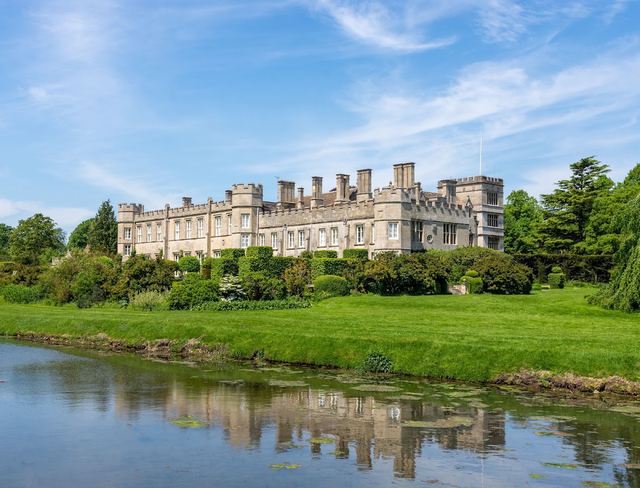
Deene Park
Home of the Brudenell family since 1514, and among the most plainly domestic visits on the list. Reviewers regularly mention being greeted by members of the household.
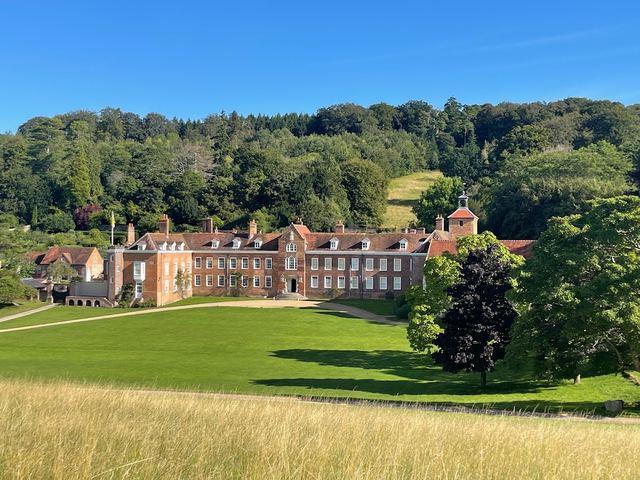
Stonor Park
In the same family for more than 850 years, opened on a short summer season with volunteer guides in the rooms.
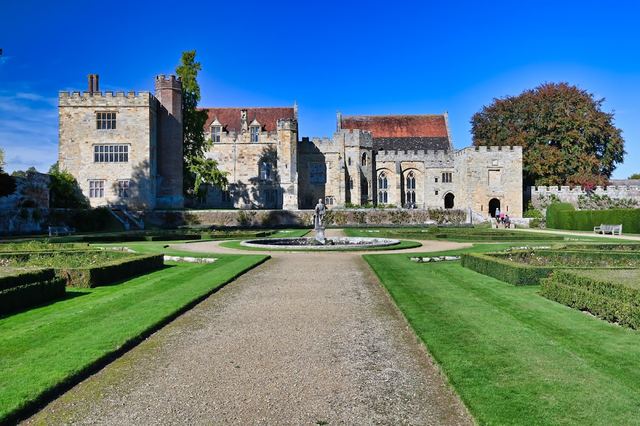
Penshurst Place
One of England's best-preserved medieval manor houses, run by the Sidney family rather than by any charity, with the Barons Hall as its centrepiece.