Guide No. 5 · The Stately Homes
What Is a Long Gallery?
Near the top of most great Elizabethan houses there is a room that makes no obvious sense: very long, very narrow, lined with windows, and lined with faces. The official explanation is that it was somewhere to walk when it rained. The real work it did was on the walls.
A long gallery is a very long, narrow room, usually on the highest main floor of an Elizabethan or Jacobean country house, running along one side of the building with windows down its length and often at both ends.
It was a room to be used rather than a corridor to pass through, and it served several purposes at once: exercise indoors in bad weather, entertaining, dancing and indoor games, private conversation away from the servants, and the display of pictures.
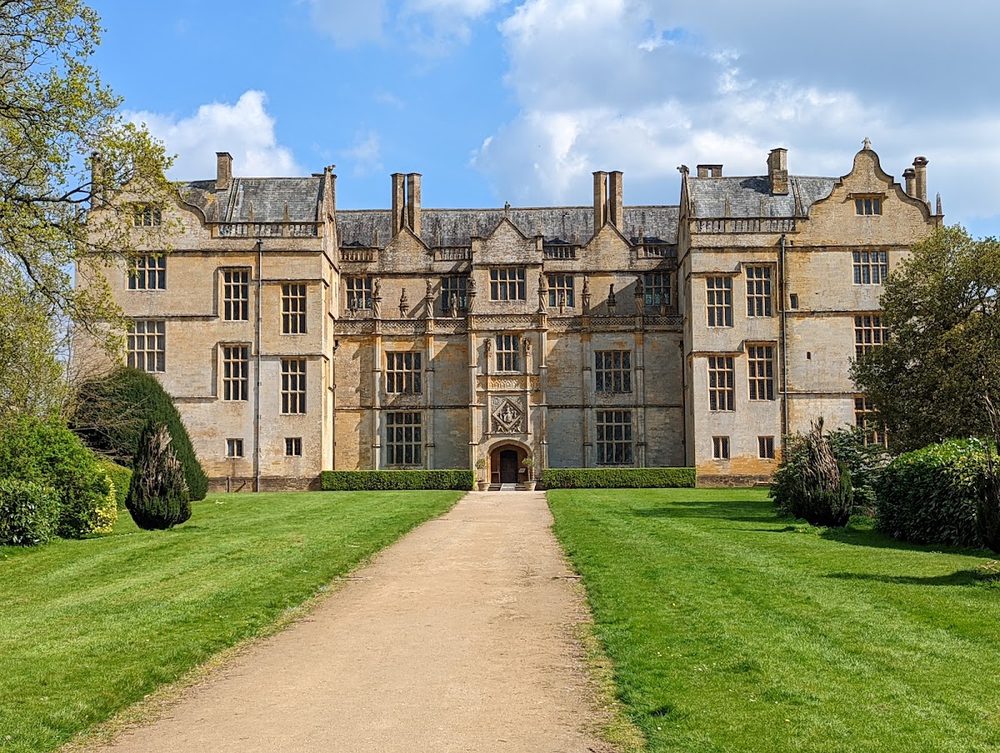
The longest surviving example in England, at Montacute House in Somerset, runs 172 feet - over 52 metres - along the top of the house.
A room the court invented
The long gallery did not begin in the countryside. It began at court, in the palaces of Henry VII and Henry VIII, where covered galleries were built to walk in and to look out over gardens and courtyards. Cardinal Wolsey inserted the first long galleries at Hampton Court and at York Place, and Henry VIII went on to build them at most of his great houses. Architectural historians usually trace the idea back further still, to the cloister walks of the monasteries the Tudors dissolved: covered, colonnaded, and built for exactly the same purpose of walking under shelter.
What happened next is the pattern that shaped English country houses for two centuries. Courtiers copied the king. Sir Thomas Boleyn, shortly after his family moved to Hever in 1505, had the great hall's height cut down so that a long gallery could be squeezed in above it. That is a substantial and expensive alteration to a working medieval house, made in order to acquire a room whose function was, on paper, walking. By the time the Elizabethan building boom arrived, no house with any ambition could be built without one.
What it was actually for
Take the practical explanation seriously first, because it is true. There was no other way to take exercise indoors, the English weather was what it is, and a room 150 feet long gives you a genuine walk. Galleries were also used for indoor games, for dancing, and for conversation: with servants everywhere and few rooms that could be entered without passing through another, a long room with a door at each end was one of the very few places in a great house where two people could talk without being overheard. In the 16th century the corridor had not yet arrived in English domestic architecture, so a room that looked like one was a novelty in itself.
But the reason a gallery was worth its cost, and the reason it kept getting longer, was that it was the room visitors were walked through. A guest did not wander into it. They were taken along it, at the owner's pace, past whatever the owner had chosen to put on the walls.
The wall as an argument
What went on those walls was chosen with care. The obvious choice was ancestors: a row of painted forebears, hung in order, making the case that the family had always been here and was not going anywhere. It is an argument aimed at exactly the people most likely to doubt it, and it worked well enough that we still read a wall of old portraits as proof of old money.
The awkward detail is that these rows were usually assembled backwards. Ingatestone Hall in Essex was built by Sir William Petre, Secretary of State to four Tudor monarchs, and is still lived in by his descendants after more than 450 years. Its gallery now holds something like 40 family portraits. Around 1600, the records suggest, exactly one was on display. The unbroken line of ancestors was not inherited; it was accumulated, one commission at a time, by generations who understood what the room was for.
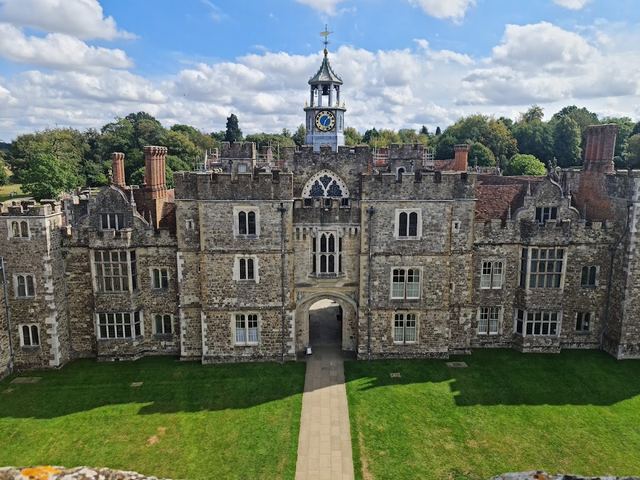
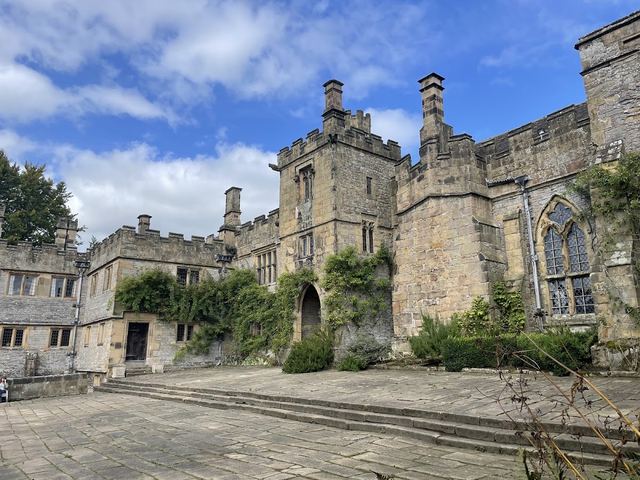
Others made the argument differently. At Haddon Hall, Sir John Manners had the panelling of his gallery, built around 1600 and roughly 110 feet long, carved with peacocks from his own coat of arms and boars' heads from the Vernon arms of his wife's family, together with the rose and thistle of the new union of the crowns. The dynastic claim is not hung on the wall there; it is cut into it. At Knole, Thomas Sackville, 1st Earl of Dorset, took a third route when he remade the house between 1605 and 1608: he installed a set of nearly fifty oval portraits of sovereigns, statesmen, churchmen and scholars, a hall of fame of the age rather than of the family. Thirty-eight of them survive, re-framed and re-hung, and now line the Brown Gallery. Hanging the great is a way of standing among them.
Bess of Hardwick buys second hand
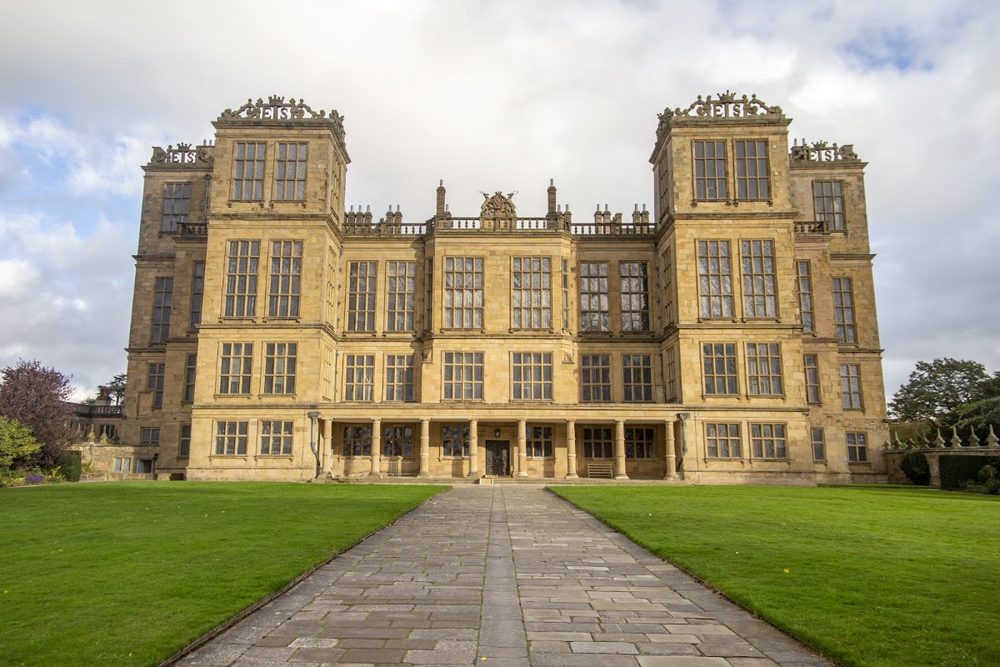
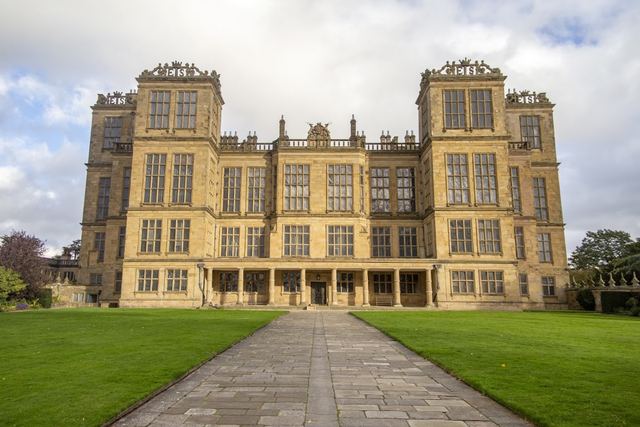
Hardwick Hall has the best story in the genre, and it is a story about budget. Its Long Gallery runs 162 feet along the east side of the house: shorter than Montacute's but bigger overall, and the only Elizabethan gallery that still has the tapestries bought for it. Those are the Gideon tapestries, and Bess of Hardwick did not commission them. They had been woven for Sir Christopher Hatton's own long gallery at Holdenby, finished in 1583. When Hatton died in debt, Bess bought the set from his estate in 1592 for £326 15s 9d, a conspicuous bargain for the largest set of tapestries in the country.
She then had them altered. Hatton's arms were overlaid with her own, and antlers were added to his crest, a golden hind, to convert it into a Cavendish stag. A visitor walking that gallery in 1600 was being shown a set of heirlooms that were four years old and had belonged to somebody else. The National Trust has spent more than twenty years conserving them, so what hangs there now is the same cloth, second-hand arms and all.
The longest gallery in England belongs to a family of farmers
Montacute House makes the point most completely. Sir Edward Phelips built it from about 1598, with 1601 cut above a doorcase as the completion date. He was a lawyer, in Parliament from 1584, knighted in 1603, Speaker of the Commons the following year, and opening prosecutor at the trial of the Gunpowder plotters. His family had been at Montacute since around 1460 as yeoman farmers. Three generations from farming to the longest long gallery in England is a fast rise, and the gallery is what the rise bought.
There is a neat closing of the circle. Since the 1970s, Montacute's gallery has held more than 60 Tudor and Elizabethan portraits on loan from the National Portrait Gallery, which made it the gallery's first outpost outside London. The room built to display a new family's standing now displays the faces of the century that made it, on loan from the nation.
What it cost to have one
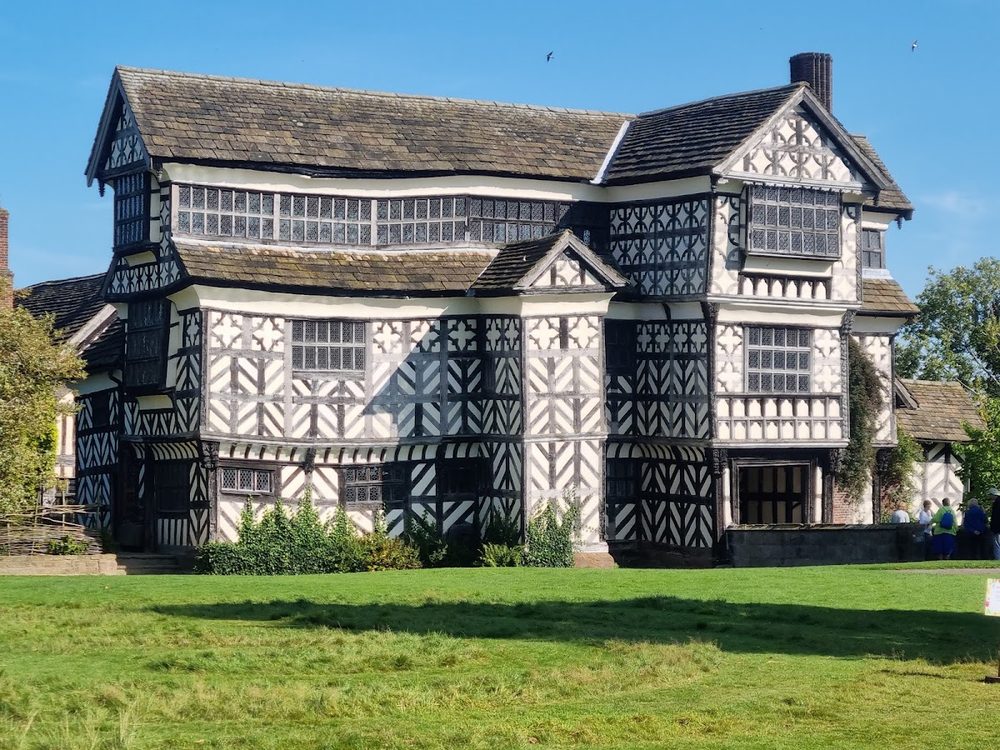
Not every family could carry the room they wanted. Little Moreton Hall in Cheshire is the cautionary version: a 68-foot gallery running the length of the top floor of a timber-framed manor house, with a roof estimated at around 32 tons resting on a frame that was never designed for it. The trusses pushed outward, the walls settled and bowed, and the famous crooked look that visitors now photograph is in large part the price of the room. The Moretons were gentry, not magnates, and they built a gallery anyway.
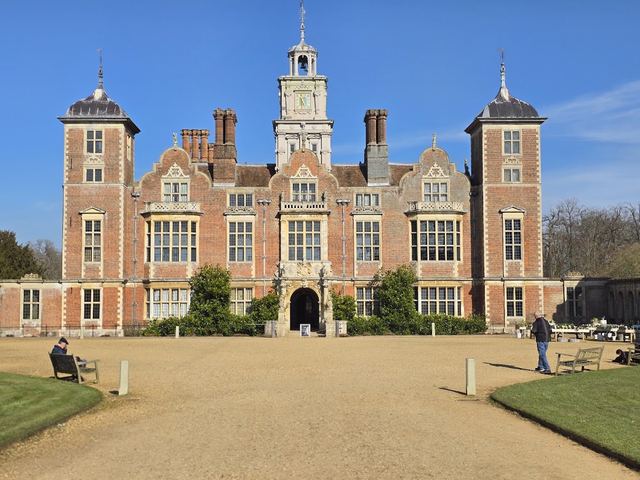
The room outlasted its own fashion too. Sudbury Hall in Derbyshire has a gallery 138 feet long finished around 1676, decades after long galleries had stopped being built: a deliberate look backwards, with a plasterwork ceiling that is now the main reason to visit the room. Blickling in Norfolk, whose 123-foot gallery went up between 1619 and 1621 with a ceiling of heraldry and emblems taken from a 1612 emblem book, later turned the space into the house's library, which is a reasonable second career for a very long room. At Parham House in West Sussex the ceiling of the roughly 160-foot gallery stayed plain for centuries, until the stage designer Oliver Messel painted it with birds and foliage, finished in 1968. And at Burton Agnes Hall in East Yorkshire the top-floor gallery was restored in stages between 1951 and 1974 and re-hung, not with ancestors, but with a 20th-century collection assembled by the owner.
That last one is the honest end of the story. The long gallery was never really a room for walking, or it would have been abandoned the moment the weather improved. It was a room for being seen to have things, and it has stayed useful for four centuries because every generation has found something new worth being seen to have.
Quick answers
What is a long gallery?
A long gallery is a very long, narrow room, usually on the top floor of an Elizabethan or Jacobean country house, running along one side of the building with windows down its length. It was a room in its own right rather than a corridor, and it did several jobs at once: somewhere to walk for exercise in bad weather, somewhere to entertain, and somewhere to hang the family's pictures.
What was a long gallery used for?
Walking, mainly. In an age with no gymnasium and no reliable weather, a room 150 feet long let the household take exercise indoors. Beyond that it was used for entertaining guests, for dancing and indoor games, as a private space for conversation out of earshot of the servants, and as the principal place to display art - above all portraits of the family and of the monarch.
Which is the longest long gallery in England?
Montacute House in Somerset, at 172 feet (over 52 metres), has the longest surviving long gallery in England. Hardwick Hall's is shorter at 162 feet but larger overall, and is the only one to keep its original Elizabethan tapestries. The gallery at Parham House in West Sussex, at around 160 feet, is usually ranked third.
Why are long galleries full of portraits?
Because a wall of ancestors is an argument. A row of painted forebears, hung in order and walked past by a guest, says that the family did not arrive recently and is not going anywhere. The awkward part is that the row is usually assembled backwards: at Ingatestone Hall in Essex, records suggest only one family portrait was on display around 1600, where about 40 hang in the gallery today.
Can you visit a long gallery?
Yes, and several of the best are open to the public. Montacute House, Hardwick Hall, Knole, Blickling, Little Moreton Hall, Haddon Hall, Sudbury Hall, Parham House, Burton Agnes Hall and Ingatestone Hall on this list all have one. Montacute's is hung with more than 60 Tudor and Elizabethan portraits on loan from the National Portrait Gallery, an arrangement that began in the 1970s and made it the gallery's first outpost outside London.
Where to walk one
Ten houses on the list with a real long gallery, from the longest surviving in England to the one that nearly pulled its house apart:
Montacute House
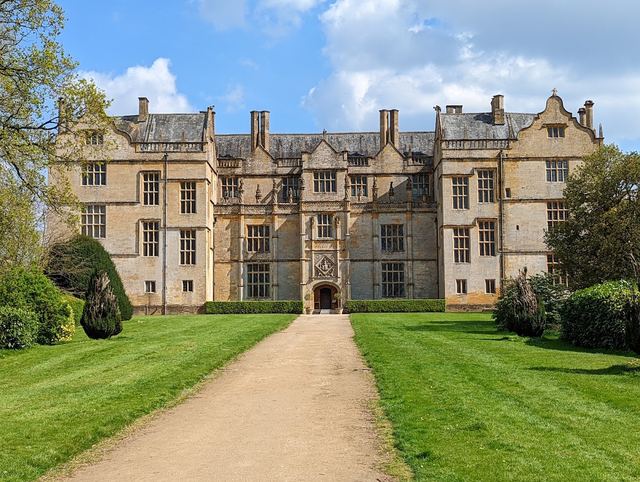
The longest surviving long gallery in England at 172 feet, built for a lawyer whose family had been yeoman farmers three generations earlier. Now hung with more than 60 Tudor and Elizabethan portraits on loan from the National Portrait Gallery.
Hardwick Hall
At 162 feet, the largest surviving Elizabethan long gallery, and the only one that still has its original tapestries: the Gideon set Bess of Hardwick bought second hand in 1592 and had re-badged with her own arms.
Knole
The Brown Gallery holds what survives of Thomas Sackville's set of portraits, installed when he remade Knole between 1605 and 1608. With Hardwick, it is among the earliest surviving portrait galleries in Britain.
Haddon Hall
A panelled gallery of around 110 feet built about 1600, its frieze carved with Manners peacocks and Vernon boars' heads: two families' emblems spelled out in oak along the whole room.
Blickling Estate
123 feet, built between 1619 and 1621 for Sir Henry Hobart, with a plaster ceiling of heraldry and emblems lifted from a 1612 emblem book. It now holds the house's library.
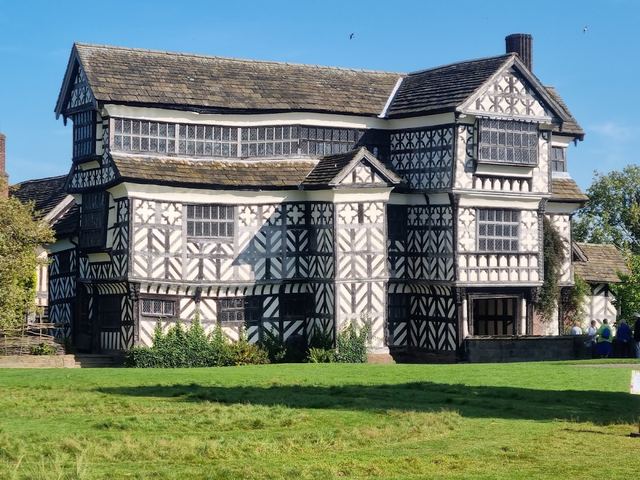
Little Moreton Hall
A 68-foot gallery added to the top of a timber-framed manor house. The roof has been estimated at around 32 tons, which is a large part of why the whole building now leans.
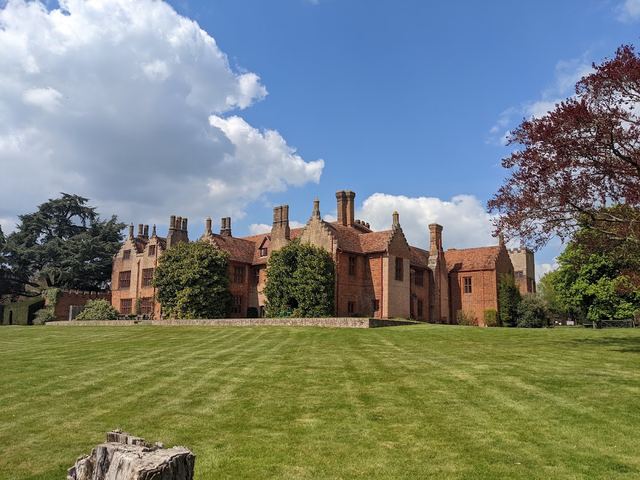
Ingatestone Hall
A gallery of about 29 metres hung with roughly 40 portraits of the Petre family, who built the house under Henry VIII and are still in it more than 450 years later.
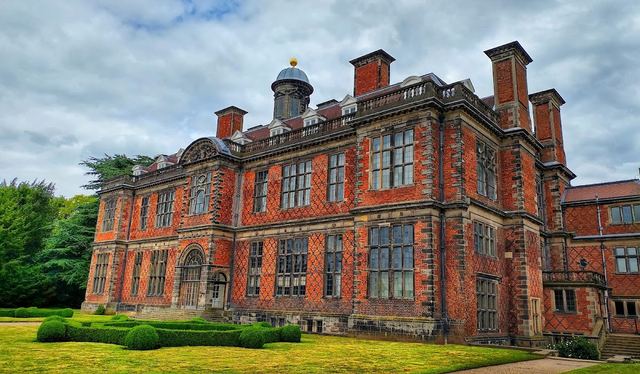
Sudbury Hall
138 feet, finished around 1676, decades after the fashion for long galleries had passed - which makes it a deliberate throwback rather than a period piece. The plasterwork ceiling is the reason to look up.
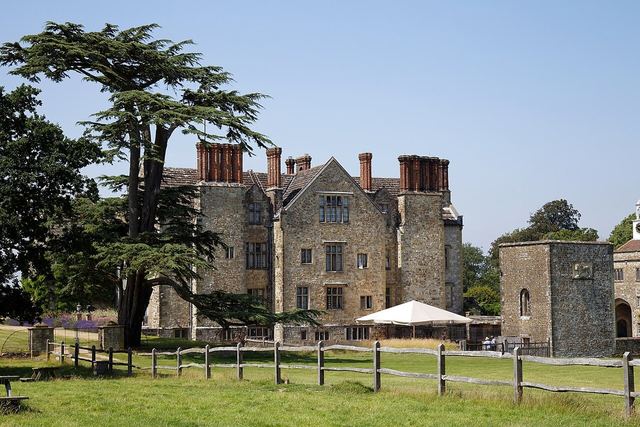
Parham House
Around 160 feet, usually ranked the third longest in the country. Its ceiling was left plain for centuries until the stage designer Oliver Messel painted it with birds and foliage, finished in 1968.
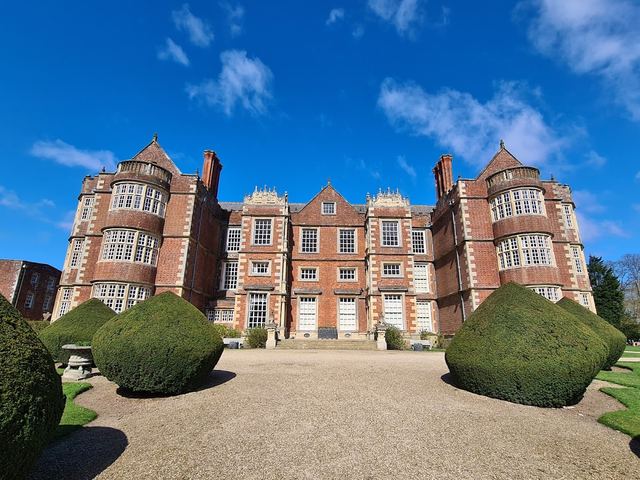
Burton Agnes Hall
A barrel-vaulted gallery on the top floor of a house built between 1601 and 1610, its ceiling restored in stages between 1951 and 1974 and now hung with a 20th-century collection rather than ancestors.