Guide No. 7 · The Stately Homes
Country Houses Requisitioned in Wartime
Twice in thirty years the state knocked on the door of the great houses and took them. What moved in was rarely what anyone expected: wounded men in the ballroom, a girls' school in the state bedrooms, a merchant bank in the long gallery, and in at least one case a map room whose existence stayed secret for sixty years.
To requisition a house was to take possession of it for war use under emergency legislation. The Defence of the Realm Act, passed on 8 August 1914, four days after Britain entered the First World War, gave the government power to take buildings and land needed for the war effort; the Emergency Powers (Defence) Act 1939 did the same job a generation later, with the Compensation (Defence) Act 1939 setting out what an owner could claim back.
In practice most country houses were used for one of four things: hospitals, evacuated schools, relocated offices, or secret work that needed somewhere large, remote and unremarkable. A good many owners offered before they were asked.
Beds, and the shortage of them
The First World War arrived with a medical problem nobody had planned for. Casualties came home in numbers the existing hospitals could not absorb, and the country's largest private buildings were the obvious answer: they had space, plumbing, kitchens already sized for scores of people, and staff who knew how to run them.
Wrest Park in Bedfordshire went first. It opened as a hospital on 7 September 1914, barely a month into the war, and English Heritage now describes it as probably the first country house to take in wounded soldiers. It ran for two years. In September 1916 a fire started and spread quickly, the troops had to be evacuated, and the hospital never reopened, which sets the pattern for a lot of what follows: the war did the damage, but rarely the enemy.
Others followed within weeks. At Highclere Castle, Almina, Countess of Carnarvon, opened a hospital for the war wounded at the outbreak of the war, helped organise it and nursed in it herself. At Cliveden, Waldorf Astor handed land to the Canadian Red Cross for the Duchess of Connaught Hospital, dismantled once the fighting stopped, then did it again in September 1939, leasing the ground for a shilling a year for the Canadian Red Cross Memorial Hospital. The hospital buildings have gone; the war cemetery in Cliveden's grounds, with graves from both conflicts, is still there.
Dunham Massey in Cheshire is the one you can now walk through. Penelope Grey, Countess of Stamford, made the house available to the Red Cross, and the Stamford Military Hospital ran there from April 1917 to January 1919, treating men with injuries ranging from gas poisoning to bullet wounds to the head. In 2014 the National Trust rebuilt the main ward, the operating theatre and the nurses' station inside the house for the war's centenary, with actors playing the real staff and patients. It is an unusually literal piece of interpretation, and it works.
Schools in the state rooms
The Second World War brought a different tenant. Evacuation needed large buildings well away from the cities, and a country house that could sleep a family, forty guests and sixty servants could sleep a school.
Chatsworth took 250 girls from Penrhos College in north Wales, who arrived in September 1939 and stayed until March 1946. The school had eighteen days to move everything it owned across the country. All three main state rooms became dormitories, the Painted Hall was used for assemblies and singing, the chapel for daily prayers, and typing practice happened in the South Sketch Gallery. The contents had been packed away, so the girls had the run of an emptied palace: they grew vegetables for the war effort and skated on the Canal Pond in winter.
Blenheim Palace got 400 boys from Malvern College in September 1939. The state rooms and the Long Library were turned into dormitories, ink was banned for fear of what it might do to the tapestries, and some lessons were taught in the laundry. MI5 later used the palace as a temporary headquarters. At Waddesdon Manor, James and Dorothy de Rothschild took in children under five evacuated from Croydon, the only time children have lived in the house, and gave asylum to a group of Jewish boys from Frankfurt.
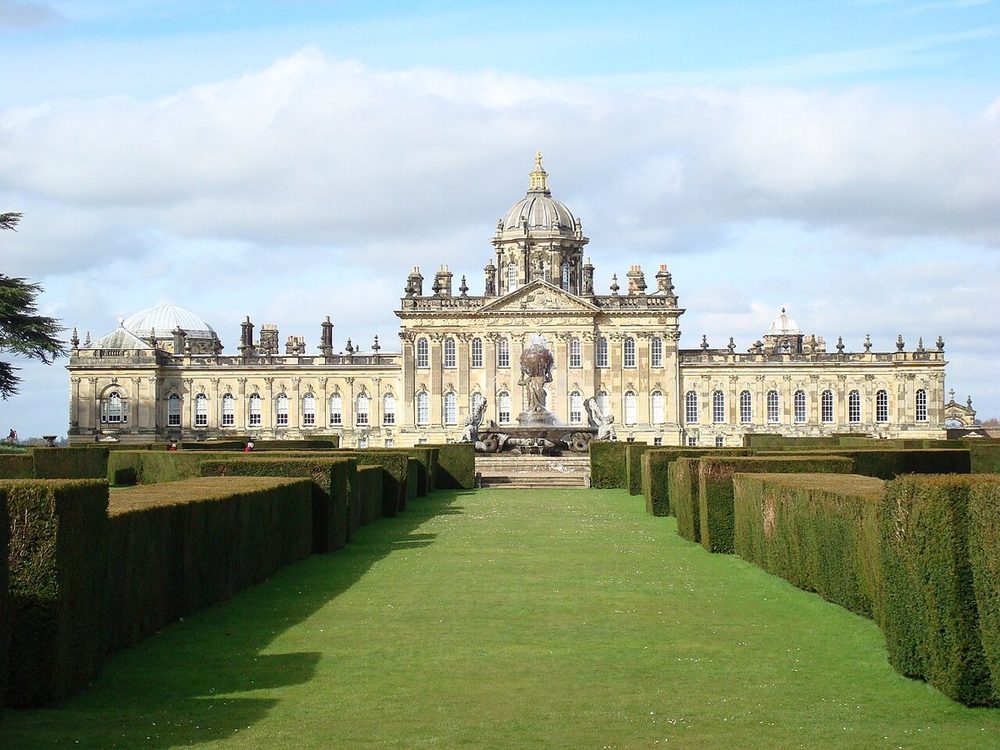
Castle Howard shows how badly it could go. More than a hundred pupils from Queen Margaret's School in Scarborough had been evacuated there when, in the early hours of 9 November 1940, fire broke out in a chimney on the south front. It took the Malton and York brigades eight hours to control, destroyed around twenty rooms, and brought Vanbrugh's dome down into the Great Hall, taking Pellegrini's painted ceiling with it. The girls were led out and then helped carry pictures to safety. The dome was not rebuilt until the early 1960s, and the east wing is still a shell.
The quiet work
The most interesting requisitions were the ones nobody was told about. A large house in its own park, screened by trees and far from anything worth bombing, is close to an ideal secret facility.
Hughenden is the best example on this list. Benjamin Disraeli's country house was taken over in the 1940s as an Air Ministry base under the codename Hillside, where staff worked from aerial photography of Germany to produce target maps for RAF Bomber Command, including for the Dambusters raid. Everyone involved was bound by the Official Secrets Act, and the story only surfaced publicly decades later. The National Trust has since recreated the map room.
Audley End in Essex was requisitioned within weeks of Lord Braybrooke's death in March 1941 and, from 1942, became Special Training School 43, where the Special Operations Executive trained Polish agents known as the Cichociemni, the Silent Unseen. A memorial to 108 of them who died stands on the main drive, unveiled in 1983 and listed in its own right in 2018.
Greenway on the River Dart, Agatha Christie's holiday house, was requisitioned by the Admiralty and used from 1943 to billet American servicemen gathering on the south coast for D-Day. Most rooms became bedrooms and the library became a recreation room, where a US Coast Guard officer, Lieutenant Marshall Lee, a commercial illustrator in civilian life, painted a frieze around the walls recording everywhere his flotilla had been, Bermuda and Morocco included, and finishing with Greenway itself. The Christies kept it. And Wilton House in Wiltshire was requisitioned as the headquarters of Southern Command, responsible for the coast from Portsmouth west to Land's End, with Nissen huts in the grounds and hundreds of miles of telephone cable laid around the estate. Much of the planning for the invasion was done there, though the final decision to go was taken elsewhere, at Southwick House in Hampshire.
Not everything that moved in wore a uniform
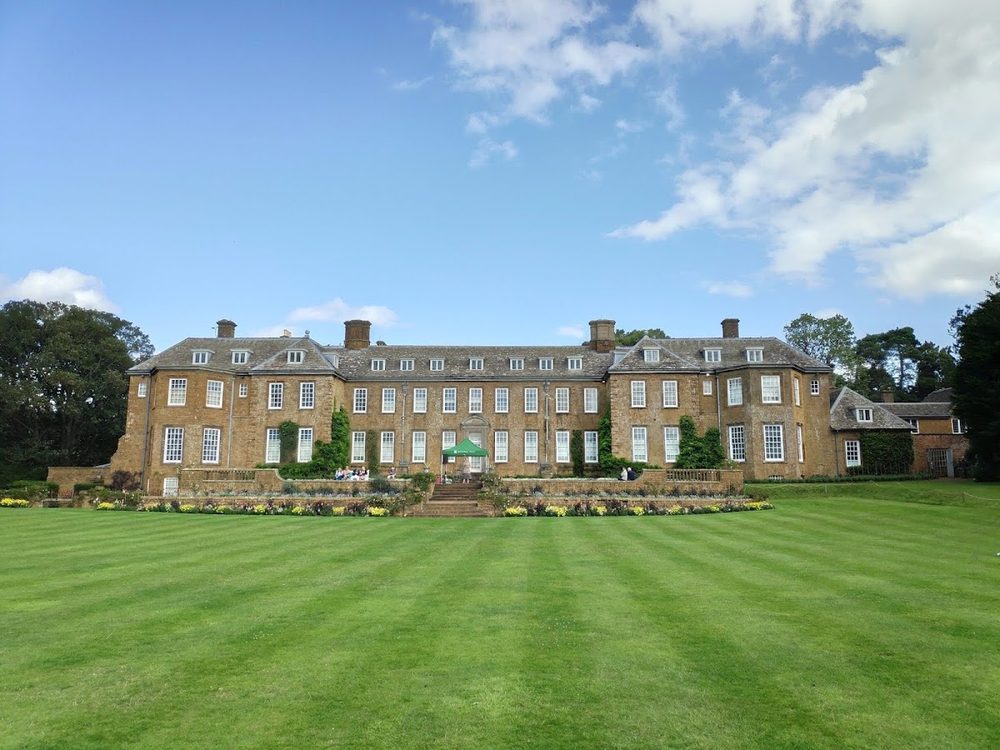
The oddest occupations were commercial. Upton House in Warwickshire belonged to Walter Samuel, 2nd Viscount Bearsted, whose family owned the merchant bank M. Samuel and Co. When London evacuation began in 1939, Bearsted moved the bank itself to Warwickshire along with his household. The great rooms he had remodelled in the 1920s specifically to display his paintings became offices; the Long Gallery became a typing pool and canteen; and the art collection was crated up and sent to a slate mine in Wales for safekeeping. The National Trust has told the story as an exhibition called Banking for Victory, and it is a useful corrective to the idea that requisition always meant soldiers.
What it cost
Compensation existed, but it was calculated on damage rather than on what restoring a house to its former state actually took, and it did not cover the underlying problem: six years of hard use by hundreds of people, in buildings that had already been expensive to run in peacetime, followed by death duties and a labour market in which nobody wanted to be a housemaid any more. A great many owners came back in 1945 to a building they could no longer afford. The two decades after the war saw country houses demolished at a rate that has no parallel in British history, and requisition is part of that story even where it was not the whole of it.
The houses on this list are the survivors, and several are better off for what happened to them. Dunham Massey and Hughenden have made their wartime chapters into the reason people visit. Greenway kept a frieze painted by a serviceman who was not supposed to leave a trace. Castle Howard's shell of an east wing is a more honest monument than any plaque. The next time a guidebook mentions in passing that a house was used as a hospital or a school, it is worth asking who was actually sleeping in the room you are standing in, and what they were doing there.
Quick answers
What does it mean that a country house was requisitioned?
Requisition meant the government took possession of a building for war use, with or without the owner's enthusiasm, under emergency legislation. The Defence of the Realm Act, passed on 8 August 1914, four days after Britain entered the First World War, gave the state the power to take buildings and land needed for the war effort. The Emergency Powers (Defence) Act 1939 did the same job in the Second World War, with the Compensation (Defence) Act 1939 governing what an owner could claim afterwards. Many houses were offered voluntarily before anyone had to be compelled.
What were country houses used for in the wars?
Four uses cover most of them. Hospitals and convalescent homes, especially in the First World War, when the country had nothing like enough beds. Evacuated schools, which needed large buildings a long way from bombed cities. Offices for firms and government departments moved out of London. And secret work: intelligence, map-making, training and command headquarters, hidden in houses precisely because they were remote and unremarkable from the air.
Which country house was the first to become a military hospital?
Wrest Park in Bedfordshire, which opened as a hospital on 7 September 1914, roughly a month into the war. English Heritage, which now runs it, describes it as probably the first country house to take in wounded soldiers. It ran for two years until a fire in September 1916 forced the troops to be evacuated, and the hospital never reopened.
Did country houses get damaged by being requisitioned?
Some did, and the damage was rarely from enemy action. Fires started by unfamiliar occupants, wear from hundreds of people living in rooms built for a family and its servants, and heavy vehicles on drives never designed for them all took a toll. Castle Howard's fire on 9 November 1940 came during its occupation by an evacuated girls' school and destroyed the dome and around twenty rooms. Compensation existed but frequently fell short of what putting a house back cost, which is part of why so many were sold or demolished after 1945.
Which requisitioned houses can you visit today?
A good number, and several interpret the wartime story directly. Hughenden, Dunham Massey, Greenway, Cliveden, Upton House and Waddesdon Manor are National Trust properties; Wrest Park and Audley End are English Heritage; Chatsworth, Castle Howard, Blenheim Palace and Highclere Castle are privately run and open to visitors. Hughenden's secret Air Ministry map room and Dunham Massey's First World War hospital have both been recreated for visitors.
Where to see it
Ten houses on the list with a documented wartime occupation, from the first country house hospital of 1914 to the secret map room that stayed secret for sixty years:
Hughenden
Disraeli's old house, and in the 1940s a secret Air Ministry base codenamed Hillside, where staff worked from aerial photography to produce target maps for RAF Bomber Command. The work stayed classified for decades.
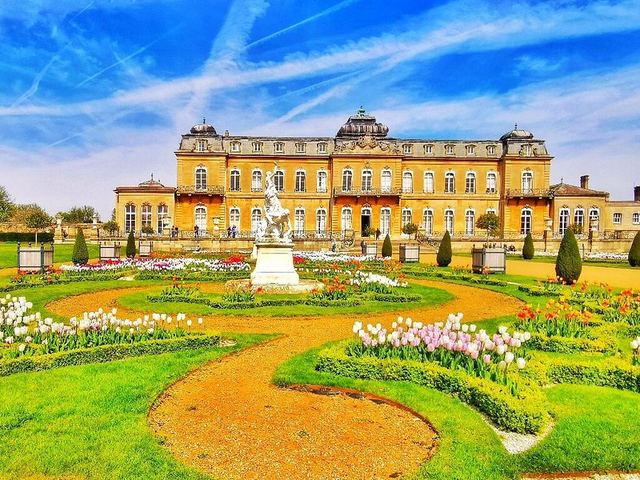
Wrest Park
Opened as a hospital on 7 September 1914, and described by English Heritage as probably the first country house to take in wounded soldiers. A fire in September 1916 forced an evacuation and it never reopened.
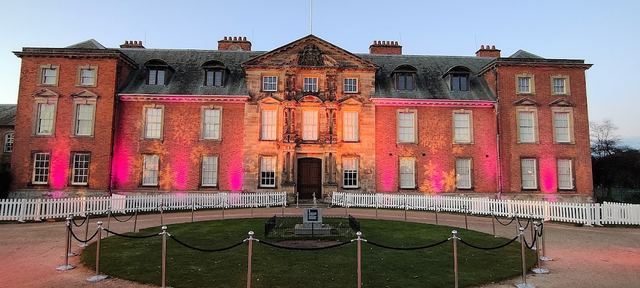
Dunham Massey
The Stamford Military Hospital, run from April 1917 to January 1919 after Penelope Grey, Countess of Stamford, made the house available to the Red Cross. The National Trust rebuilt the ward for visitors in 2014.
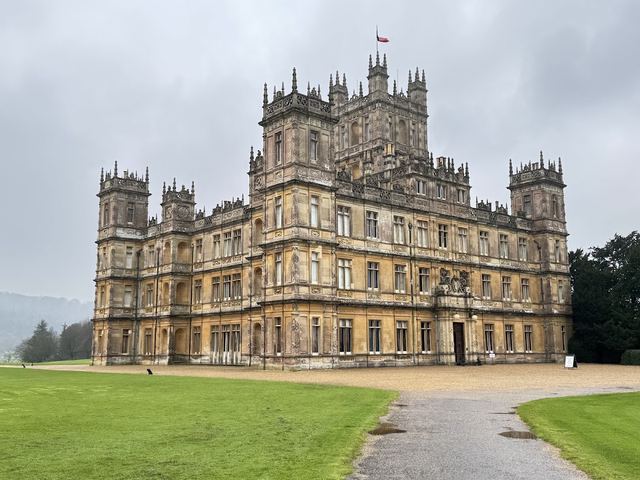
Highclere Castle
A hospital for the war wounded from the start of the First World War, organised by Almina, Countess of Carnarvon, who also nursed there herself. In the Second World War it housed evacuee children.
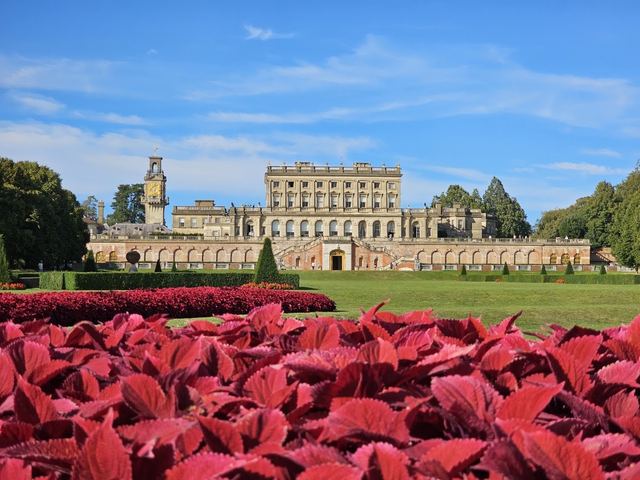
Cliveden
Waldorf Astor gave land to the Canadian Red Cross in both wars: the Duchess of Connaught Hospital in the first, dismantled afterwards, and the Canadian Red Cross Memorial Hospital in the second. The war cemetery in the grounds remains.
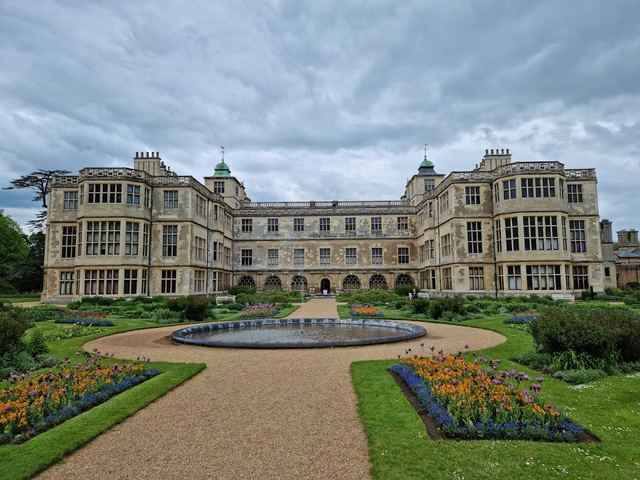
Audley End House and Gardens
Requisitioned within weeks of Lord Braybrooke's death in 1941, and from 1942 Special Training School 43, where the Special Operations Executive trained Polish agents, the Cichociemni. A memorial to 108 of them stands on the drive.
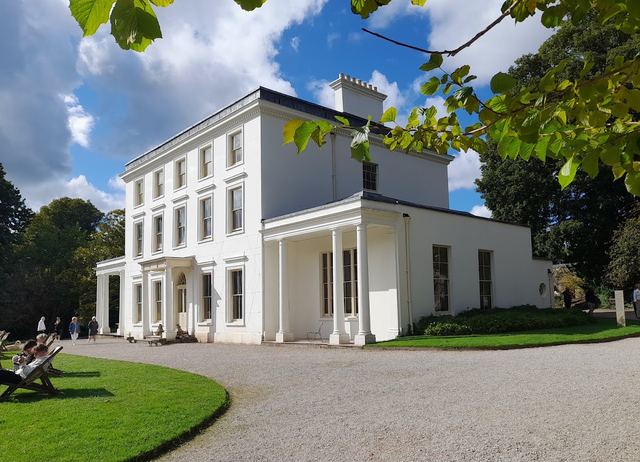
Greenway
Agatha Christie's holiday house, requisitioned by the Admiralty and used from 1943 to billet American servicemen preparing for D-Day. A US Coast Guard officer painted a frieze round the library, and it is still there.
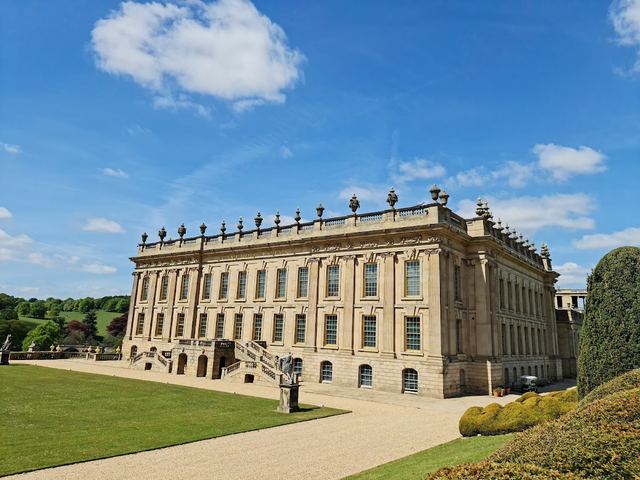
Chatsworth House
Home to 250 girls from Penrhos College in north Wales from September 1939 to March 1946. The state rooms became dormitories, the Painted Hall held assemblies, and the girls skated on the Canal Pond in winter.
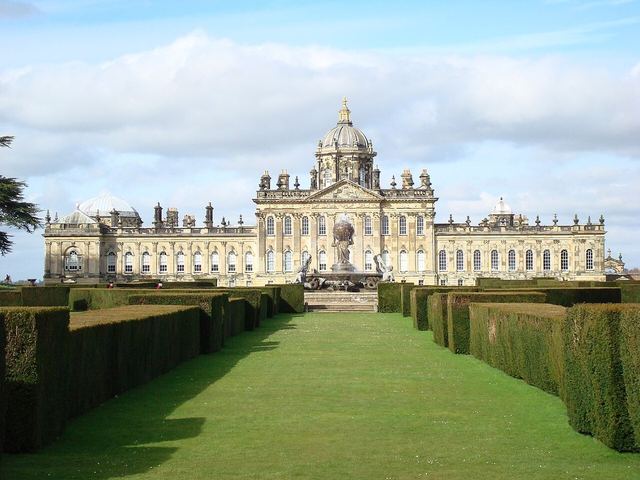
Castle Howard
Occupied by more than 100 evacuated pupils from Queen Margaret's School, Scarborough, when fire tore through the house on 9 November 1940. The girls helped carry paintings out; the dome was not rebuilt until the 1960s.
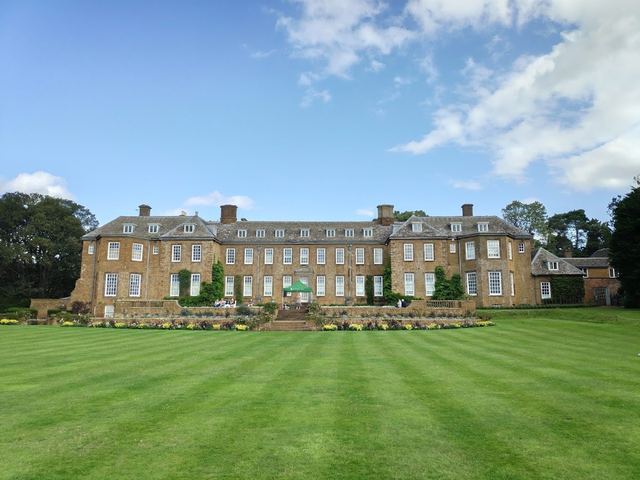
Upton House
Not soldiers but bankers. Lord Bearsted moved his family merchant bank, M. Samuel and Co., out of London to Upton in 1939. The Long Gallery became a typing pool and canteen, and the art collection went to a Welsh slate mine.