Guide No. 12 · The Stately Homes
What Was the Grand Tour?
Send a rich nineteen-year-old to Italy for three years and he comes back with opinions, a portrait of himself among the ruins, and a great deal of marble. A surprising number of the houses on this list exist to hold what one young man bought abroad.
The Grand Tour was an extended journey through continental Europe, usually built around a long stay in Italy, undertaken by wealthy young British men as the finishing stage of their education. It ran from roughly the late 17th century to the early 19th, and could last anything from a year to six.
It matters to anyone visiting a country house because of what it left behind. A great deal of what you walk past in these buildings - the Roman heads on the stairs, the dark Italian paintings, the temple in the garden - was bought abroad by one man in his twenties, shipped home in crates, and then given a building to live in.
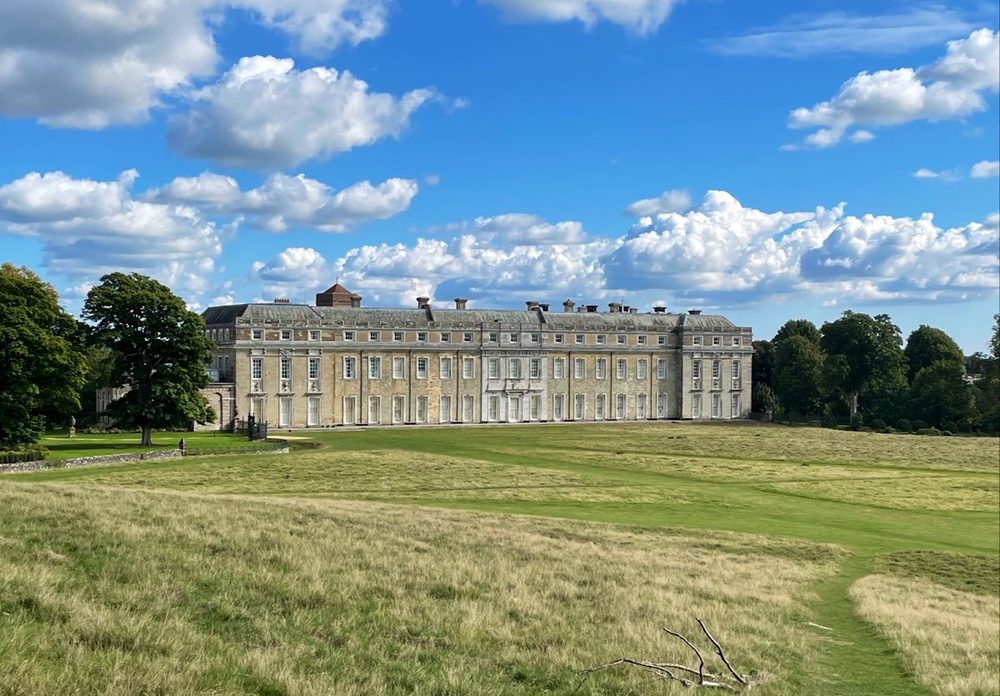
The circuit, and the people on it
The usual route ran through Paris, over the Alps, and down through Turin, Florence and Venice to Rome, with Naples added to the itinerary once the excavations at Herculaneum and Pompeii turned it into a destination. A tourist travelled with servants and with a tutor hired to keep him at his books and out of difficulty, a job so thankless the tutors were known as bear-leaders.
The educational framing was real, and so was the drinking. The Society of Dilettanti, founded around 1734, was made up of men who had made the journey, and it went on to fund serious archaeological expeditions to Athens and Ionia and to publish the results. Horace Walpole, writing in 1743, described it rather differently: a club whose nominal qualification was having been in Italy, and whose real one was being drunk. Both descriptions are accurate about different members, and often about the same ones.
The men who sold them the past
An arriving tourist did not go digging. He went to a dealer, and in Rome that meant a small, well-connected trade in expatriate Britons and Italian craftsmen. Thomas Jenkins, a painter turned antiquities dealer, and the Scottish painter Gavin Hamilton, who excavated on a commercial scale, supplied a large share of the marbles that ended up in English country houses. It was Hamilton who acquired the fourth-century BC marble head of Aphrodite now called the Leconfield Head for the 2nd Earl of Egremont in 1755, and it hangs on the Petworth story ever since.
Behind the dealers sat the restorers. Bartolomeo Cavaceppi ran the most eminent workshop of the kind in Rome, and his job was to make damaged antiquities saleable: missing arms carved and fitted, surfaces cleaned, a head from one find set on a body from another. His client list reads like a roll call of this trade, Coke of Holkham, Egremont of Petworth, Hamilton and Jenkins among them. Very little of what came home was quite as ancient, or quite as whole, as the crate suggested.
The Venus that arrived in parts
Newby Hall in Yorkshire holds the clearest single example. William Weddell, touring in the mid-1760s, bought from Jenkins a Roman statue of Venus for a sum reputed to be the highest paid for any antiquity in the 18th century. Its arms had been restored while it was in Hamilton's or Jenkins's hands, and its head came from somewhere else entirely. Weddell shipped it home along with nineteen chests of other antiquities, and in 1767 commissioned Robert Adam to build somewhere to put them: the Statue Gallery, two square rooms either side of a central rotunda, laid out in the manner of a Roman house.
The postscript is worth having. The statue was sold at Christie's in 2002 for almost eight million pounds, a world auction record for an antiquity, and what stands in the gallery at Newby now is a marble replica. The room was built for the object; the object left; the room is still the reason to go.
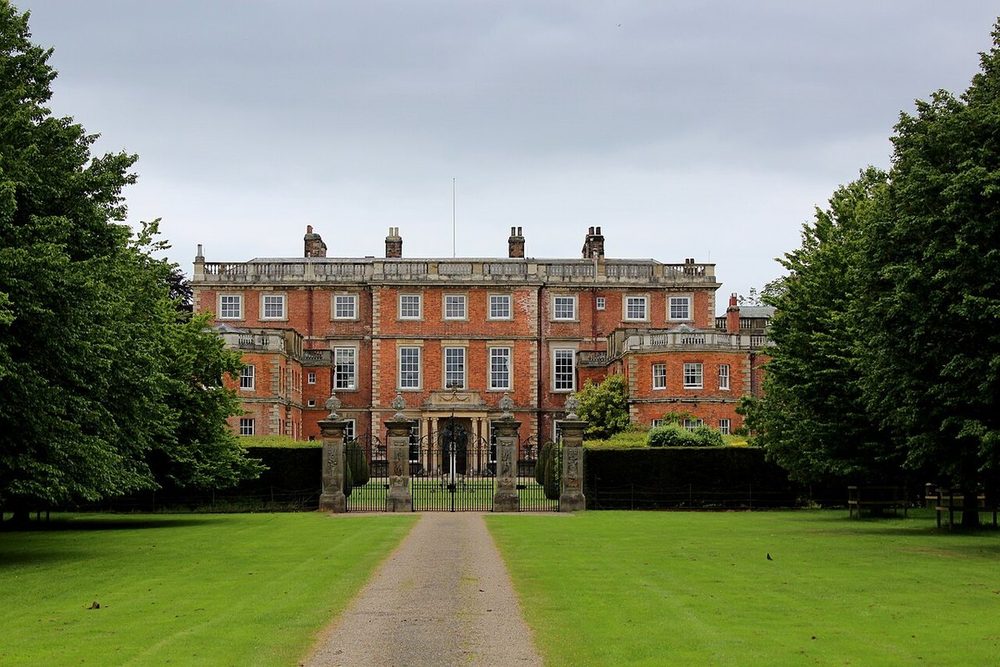
Houses built around the luggage
Holkham Hall in Norfolk is the purest case of the sequence running in that order. Thomas Coke left England in 1712 and did not come back until 1718, six years in which he met William Kent in Italy around 1715, assembled a library, and bought a collection of sculpture. Only then was the house designed. The Statue Gallery's niches were cut to fit individual statues, which is why the sculpture there reads as part of the architecture rather than as furniture standing in it. Among the books was a Leonardo notebook Coke bought in 1719, still known as the Codex Leicester after him. His descendants sold it at auction in 1980 for 5.1 million dollars, and in 1994 Bill Gates bought it for 30.8 million.
Ickworth in Suffolk is the case where the sequence broke. Frederick Hervey, 4th Earl of Bristol and Bishop of Derry, was an obsessive traveller and collector who spent much of his life on the continent, and in 1795 he began an enormous domed rotunda in Suffolk explicitly as a gallery for what he had bought. In 1798 French troops confiscated his collection in Rome, and the same year he was imprisoned by the French at Milan for suspected spying and held for eighteen months. He died in 1803 with the rotunda still a shell, and his son finished it. A few of the confiscated sculptures were bought back in Paris in the 1820s. His travelling did leave one other mark: the fashion on the continent for calling a very good hotel the Hotel Bristol is generally traced to him.
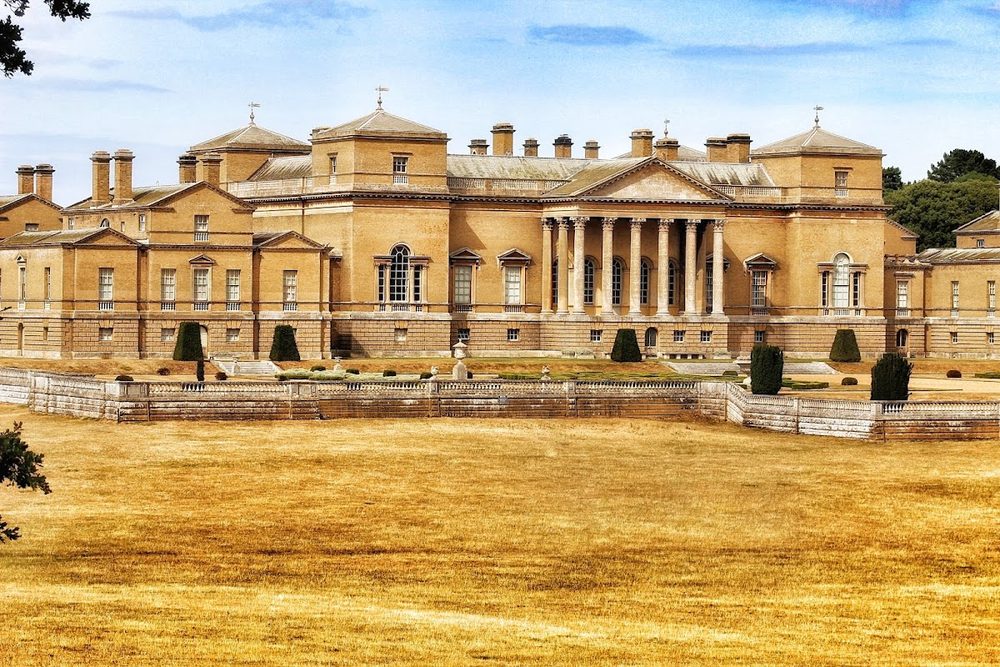
It changed the buildings, not just the contents
The architects went too, and their tours are the reason the influence is structural rather than decorative. Robert Adam sailed from Dover in October 1754 and spent four years abroad, most of it in Rome, drawing with the French draughtsman Charles-Louis Clerisseau, visiting the Herculaneum excavations, and surveying Diocletian's palace at Spalato. He was well enough regarded there that Piranesi dedicated his Campo Marzio of 1762 to him. Back in Britain from 1758, he put the results to work: the south front of Kedleston Hall is a blind triumphal arch drawn from the Arch of Constantine, wrapped around a domed hall, which was a new idea in a private house.
Stourhead in Wiltshire shows the softer version of the same influence. Henry Hoare II, who laid out the lake and its temples from 1741, owned paintings by Claude Lorrain, and the celebrated view across the water to the Pantheon is widely read as an attempt to build one of those paintings at full scale and let people walk into it. The reading is an interpretation rather than a documented instruction, but it is hard to stand there and think of a better one.
What happened to it afterwards
Collections were not permanent, and two houses on this list show how quickly they could move. At Attingham Park in Shropshire, the 2nd Lord Berwick commissioned John Nash in 1805 to add a picture gallery roofed in cast iron and curved glass, an early and ambitious piece of engineering that leaked from the beginning. He then ran out of money spectacularly, and the contents of the house were auctioned in 1827 and again in 1829. His brother inherited, and having spent 28 years as a diplomat posted in Italy, refilled the place with a collection of his own.
At Houghton Hall in Norfolk the loss was permanent. Sir Robert Walpole had gathered more than 400 Old Master paintings there, including Van Dyck, Rubens, Rembrandt, Poussin and Velazquez. In 1779 his grandson, the 3rd Earl of Orford, sold the lot to Catherine the Great of Russia to pay down the estate's debts, and most of those pictures have been in St Petersburg ever since. The house that was designed around a collection outlived the collection by two and a half centuries.
Why it ended
The French Revolutionary and Napoleonic wars shut the usual routes for the best part of a generation, and the world that reopened afterwards was not the same one. Steamships and railways made continental travel cheaper, faster and far more common, and a journey that had been a two-year apprenticeship for a few hundred very rich young men turned into a holiday a great many people could take. The buying went on, but it was no longer the point of the trip.
What survives is the architecture the habit produced. When a house on this list has a top-lit gallery, a room of Roman heads, a temple across the lake or a portico borrowed from somewhere in the Forum, that is usually not a decorative flourish. It is the record of a specific journey, made by a specific young man, and the building is the receipt.
Quick answers
What was the Grand Tour?
The Grand Tour was an extended journey through continental Europe, usually built around a long stay in Italy, undertaken by wealthy young British men as the finishing stage of their education. It ran from roughly the late 17th century to the early 19th, typically lasted anywhere from a year to six, and was understood at the time as much as a shopping trip and a social apprenticeship as an education.
Who went on the Grand Tour, and who went with them?
Mainly young aristocratic and gentry heirs, often in their late teens or twenties, travelling with a tutor engaged to keep them working and out of trouble, plus servants. The tutors were nicknamed bear-leaders. The route generally ran through Paris, over the Alps and down through Turin, Florence and Venice to Rome, with Naples added once the excavations at Herculaneum and Pompeii became an attraction.
What did Grand Tourists bring home?
Antique Roman sculpture above all, along with Old Master paintings, view paintings of the cities they had visited, prints, books and manuscripts, and a portrait of themselves posed among ruins. Pompeo Batoni alone painted over 200 recorded portraits of visiting British patrons in Rome. Purchases were crated and shipped home, and many were bought specifically to furnish a house that had not been built yet.
Which houses can you still see a Grand Tour collection in?
Petworth House holds what is described as the largest Grand Tour collection of antique statuary still in its original setting. Holkham Hall's Statue Gallery was built with niches cut to fit Thomas Coke's sculpture exactly, and Newby Hall has a Statue Gallery designed by Robert Adam for William Weddell's Roman marbles. All three are on this list, along with Ickworth, whose rotunda was designed as a gallery for a collection that never arrived.
Why did the Grand Tour end?
The French Revolutionary and Napoleonic wars closed the usual routes across Europe for the best part of a generation, and by the time travel was easy again the railway and the steamship had made continental travel possible for far more people and far shorter trips. What had been a two-year rite of passage for a few hundred rich young men became a holiday, and the buying stopped being the point of it.
Where the crates ended up
Eight houses on the list shaped by what came back, from a gallery built to fit the statues to one built for a collection that never arrived:
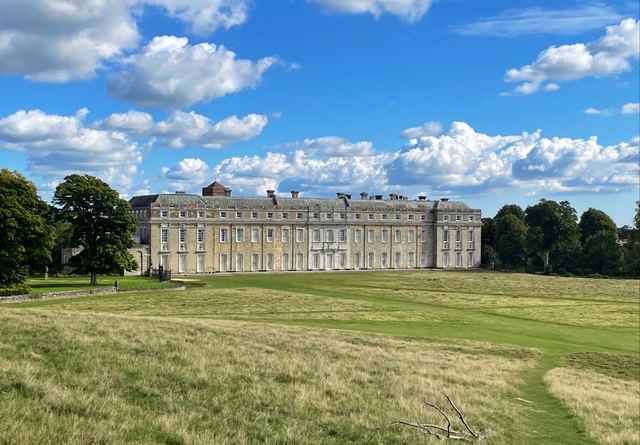
Petworth House
The antique marbles bought by Charles Wyndham, 2nd Earl of Egremont, in the 1750s, still in the North Gallery he built for them - described as the largest Grand Tour collection of antique statuary left in its original setting.
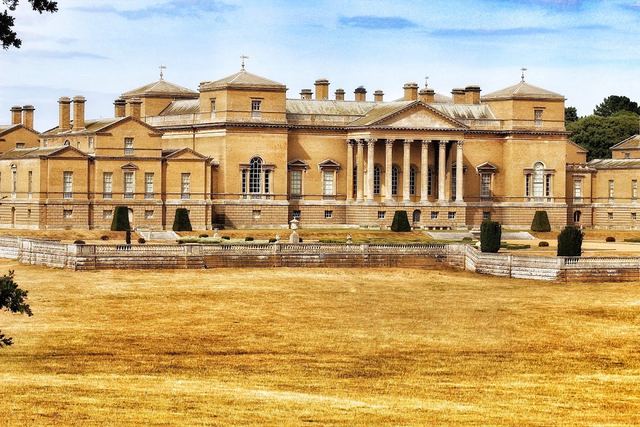
Holkham Hall
Thomas Coke spent six years abroad, from 1712 to 1718, and came back with a library and a sculpture collection for a house he had not yet built. The Statue Gallery's niches were cut to fit the statues exactly.
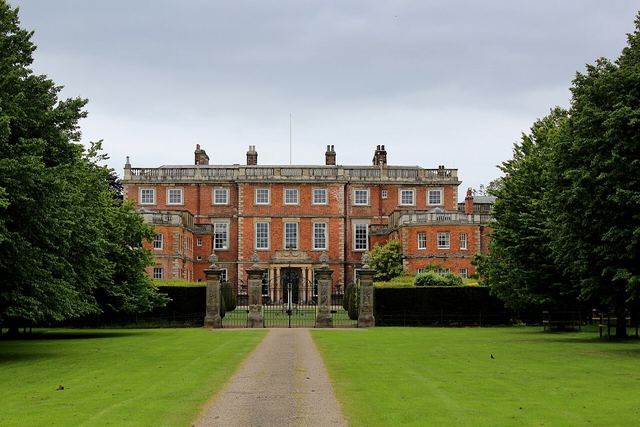
Newby Hall
William Weddell came home from Rome in the mid-1760s with nineteen chests of antiquities. Robert Adam was commissioned in 1767 to build the Statue Gallery that still holds them.
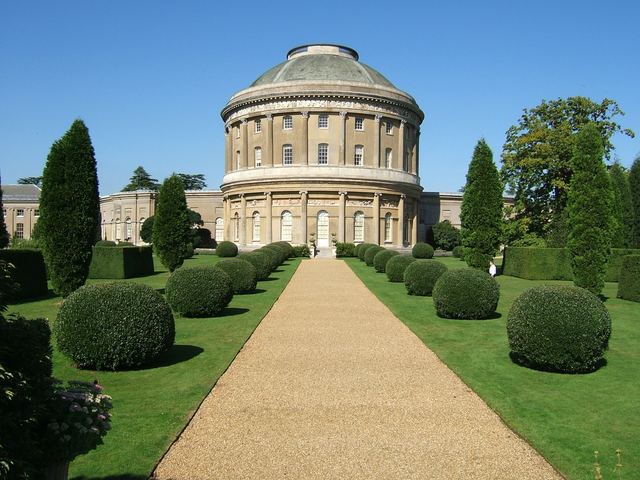
Ickworth
Frederick Hervey, 4th Earl of Bristol, began the great rotunda in 1795 as a gallery for his collection. French troops confiscated the collection in Rome in 1798, and he died in 1803 with only the shell built.
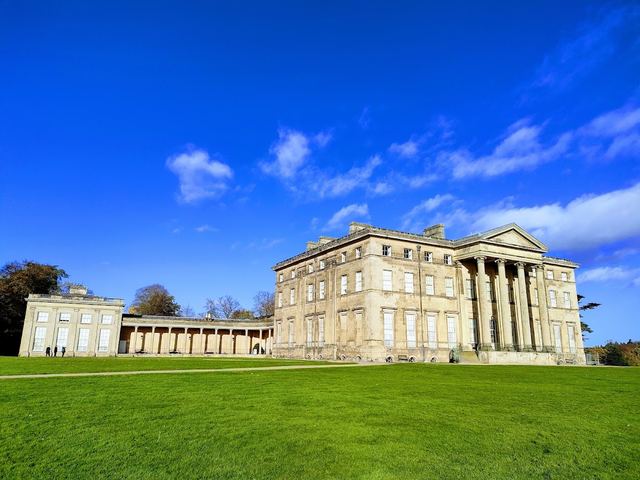
Attingham Park
John Nash added the picture gallery in 1805, roofed in cast iron and curved glass, for the 2nd Lord Berwick's collection. The collection was auctioned off in 1827; his brother, 28 years a diplomat in Italy, refilled the house.
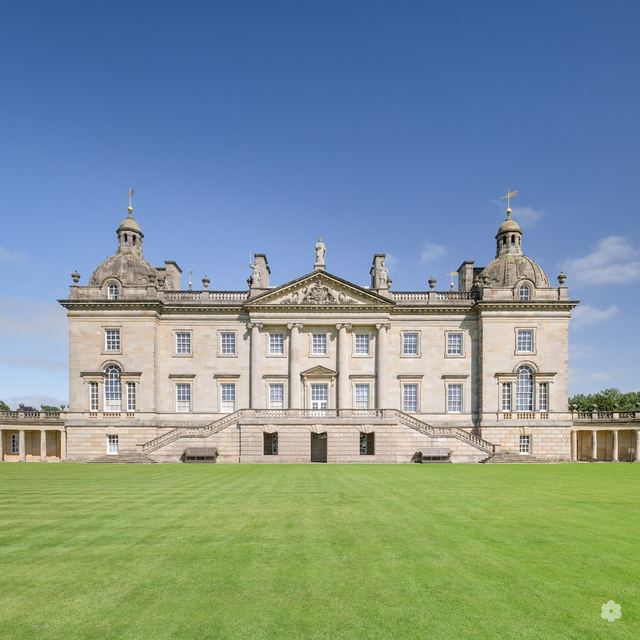
Houghton Hall
Sir Robert Walpole assembled more than 400 Old Master paintings here. In 1779 his grandson sold them to Catherine the Great of Russia to clear the estate's debts, and the walls have hung differently ever since.
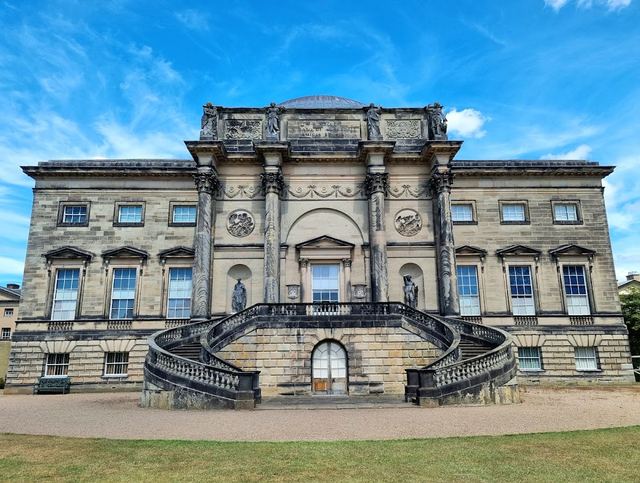
Kedleston Hall
Robert Adam came home from four years in Italy in 1758 and put a version of the Arch of Constantine on the south front - the classical education of one architect, built at full size in Derbyshire.
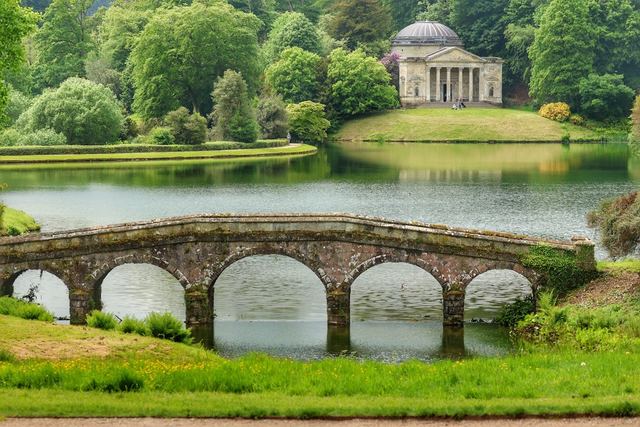
Stourhead
Henry Hoare II owned paintings by Claude Lorrain, and the lake, temples and Pantheon he laid out from 1741 are widely read as an attempt to build one of those paintings at full scale and walk through it.